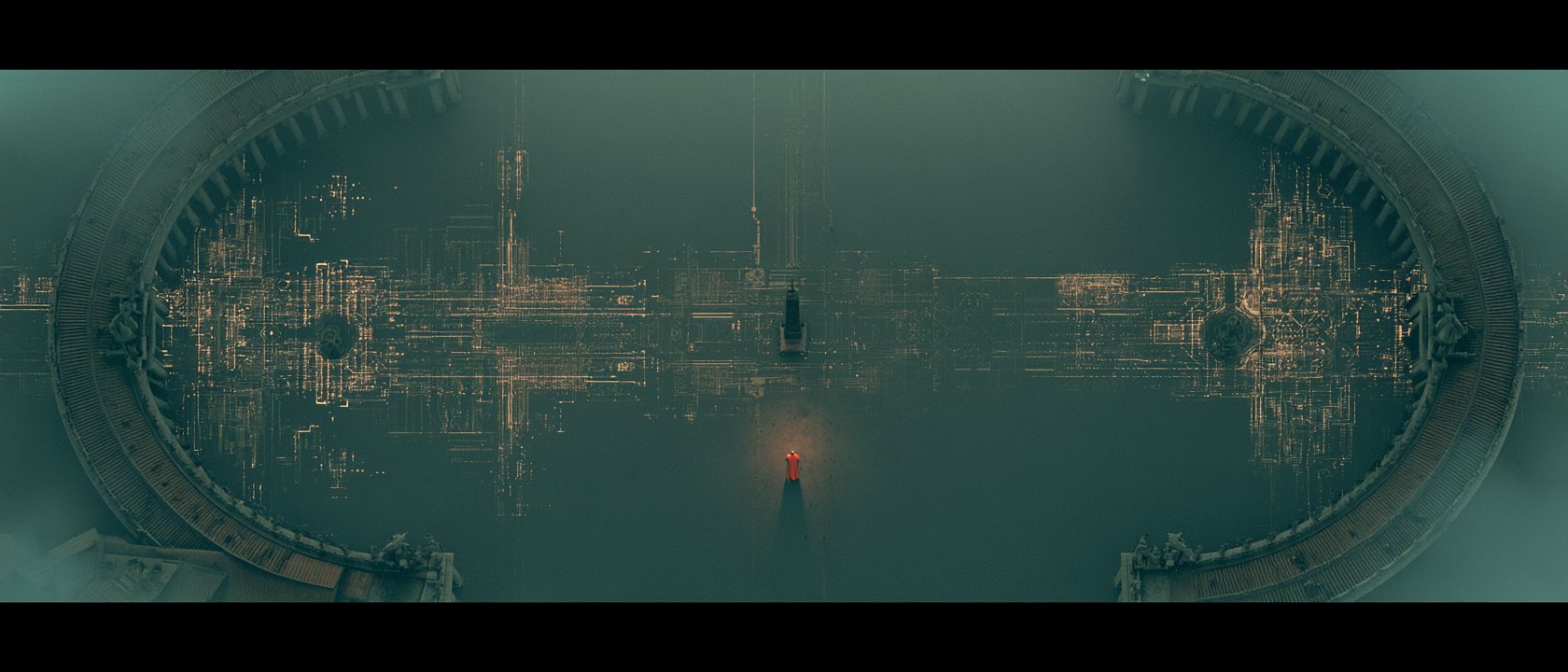
MAGNIFICA
HUMANITAS
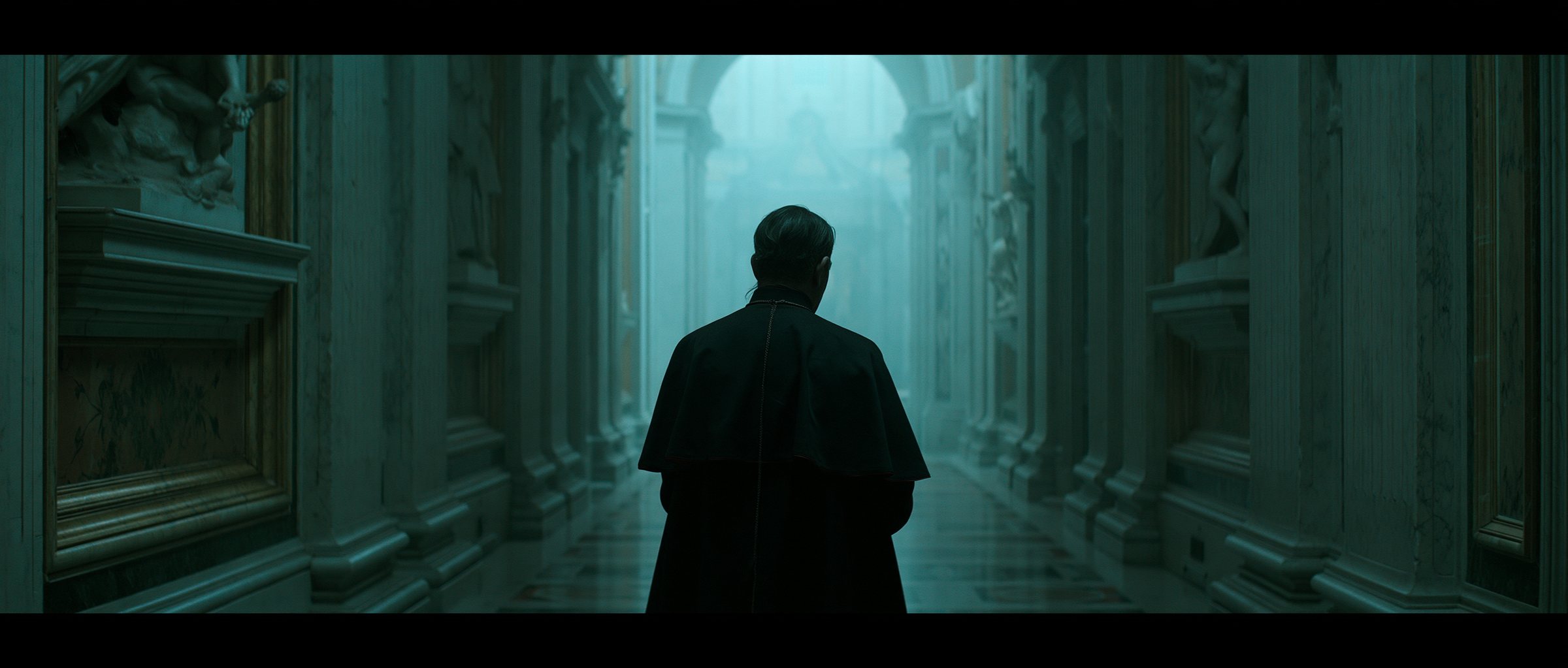
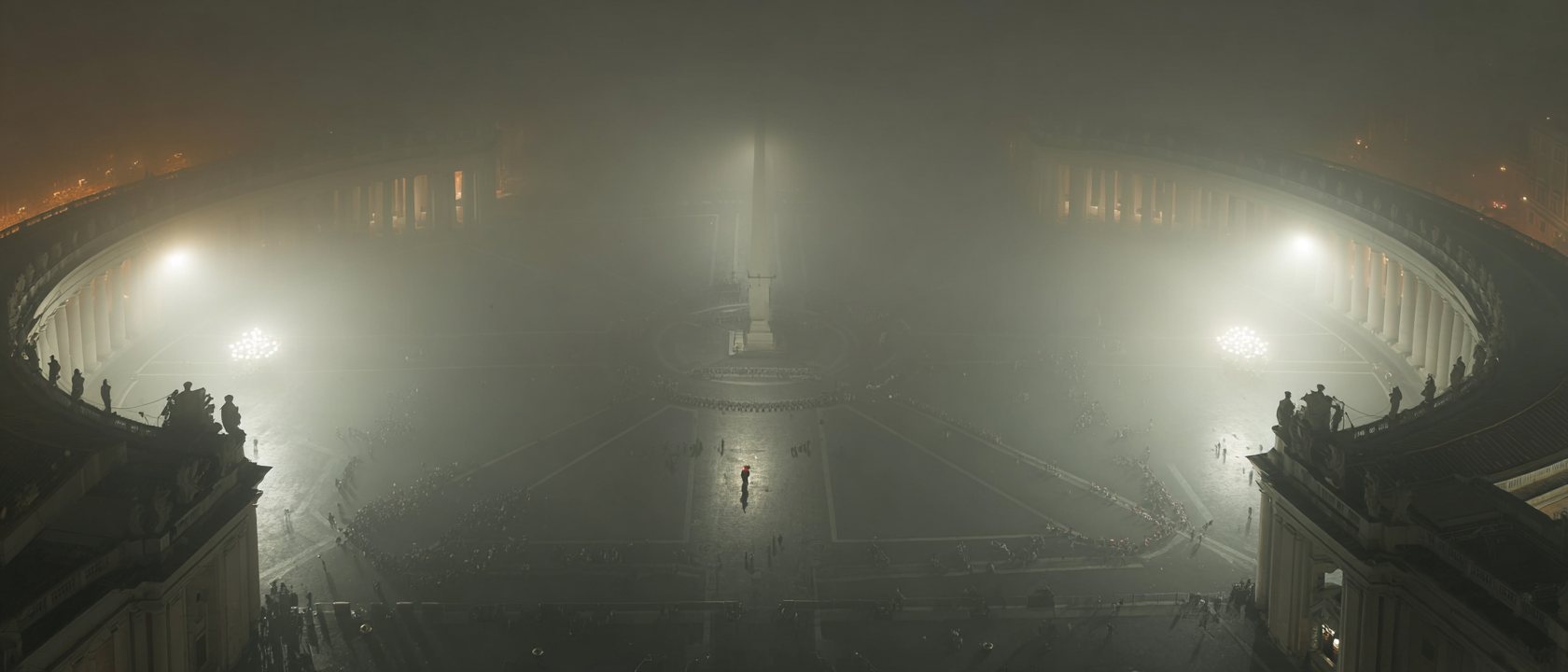
Night envelops the Vatican.
In the deserted corridors of the Apostolic Palace, the only sound is the rhythmic friction of leather shoes on marble worn by centuries.
The human mind is outsourcing its own conscience to silicon structures, and we watch the screens light up without realizing that darkness is setting in.
Entrusted by the Pope with a confidential mission, one cardinal crosses the world to decide where the human ends and the machine begins.
From the Vatican Observatory in Arizona to the glass fortresses of Silicon Valley, from the hidden annotation rooms of Manila to the Peace Memorial at Hiroshima, ALGORAND follows Cardinal Michael Czerny as the Church forges its first encyclical on artificial intelligence.
FormatFeature documentary. 1 x 90. Captured live, without a traditional narrator.
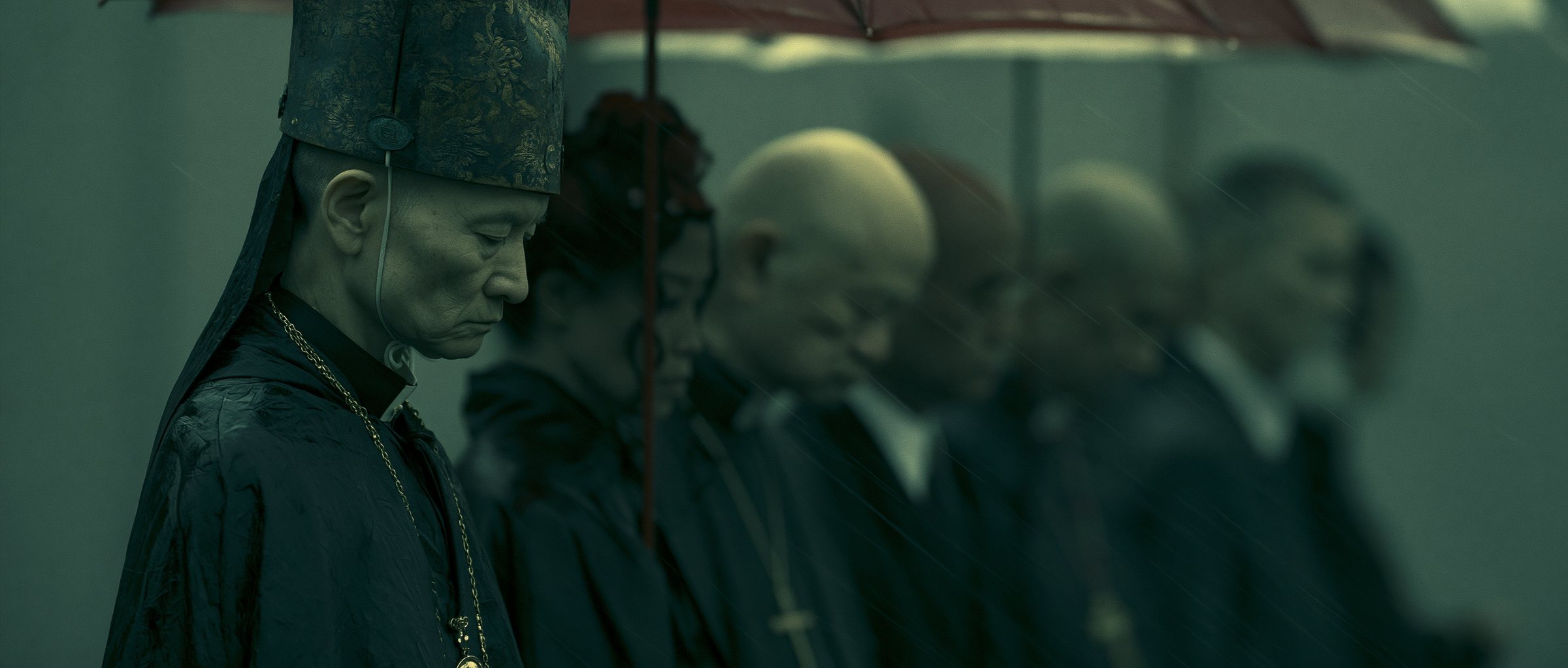
Behind the millenary stones of the Vatican, Cardinal Michael Czerny, Prefect of the Dicastery for Promoting Integral Human Development, is entrusted by the Pope with a confidential and vital mission. As cognitive technologies advance at a dizzying pace, the Church prepares to publish its first major encyclical on artificial intelligence, Magnifica Humanitas. To anchor this text in reality, Czerny undertakes an unprecedented global investigation, confronting theology with the digital revolution. The film traces this intellectual and spiritual quest, captured live without a traditional narrator, guided entirely by the Cardinal's intimate mental voice and a series of powerful, frontal face-to-camera interviews with key global players.
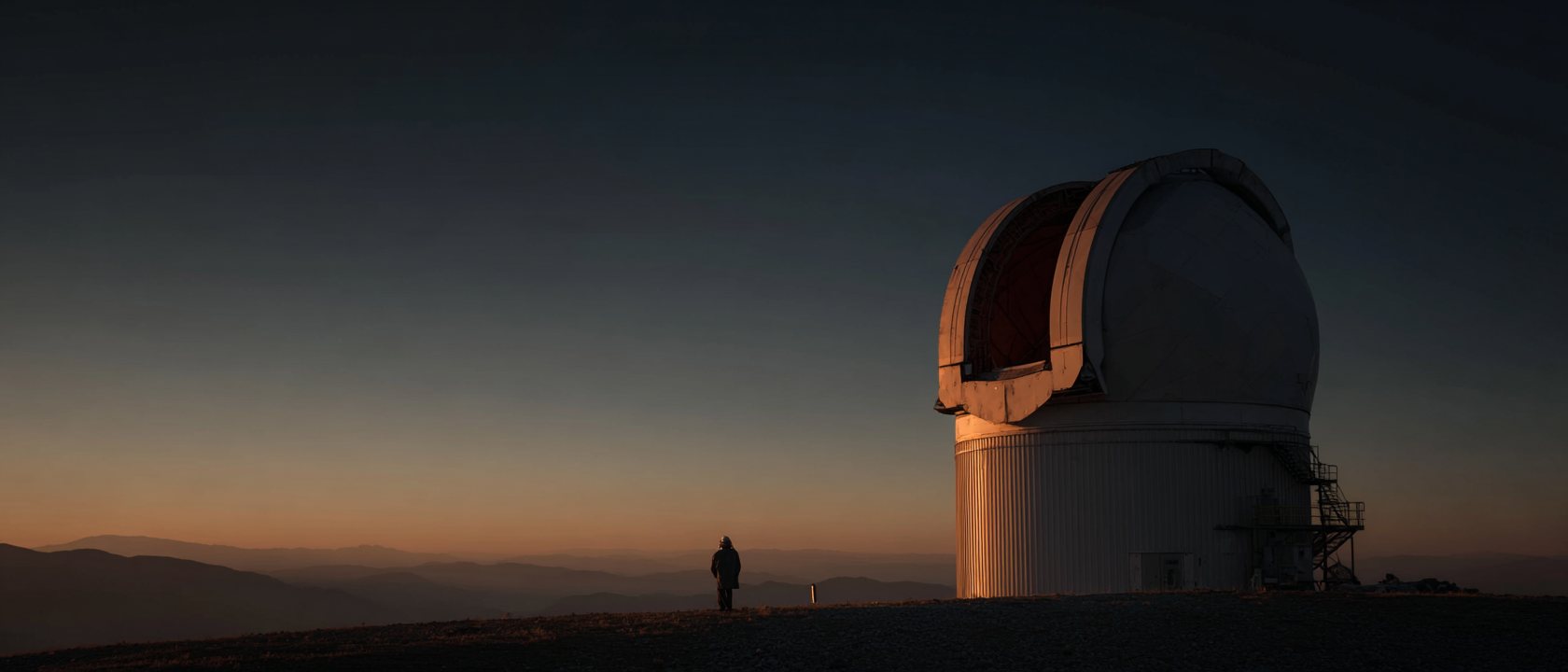
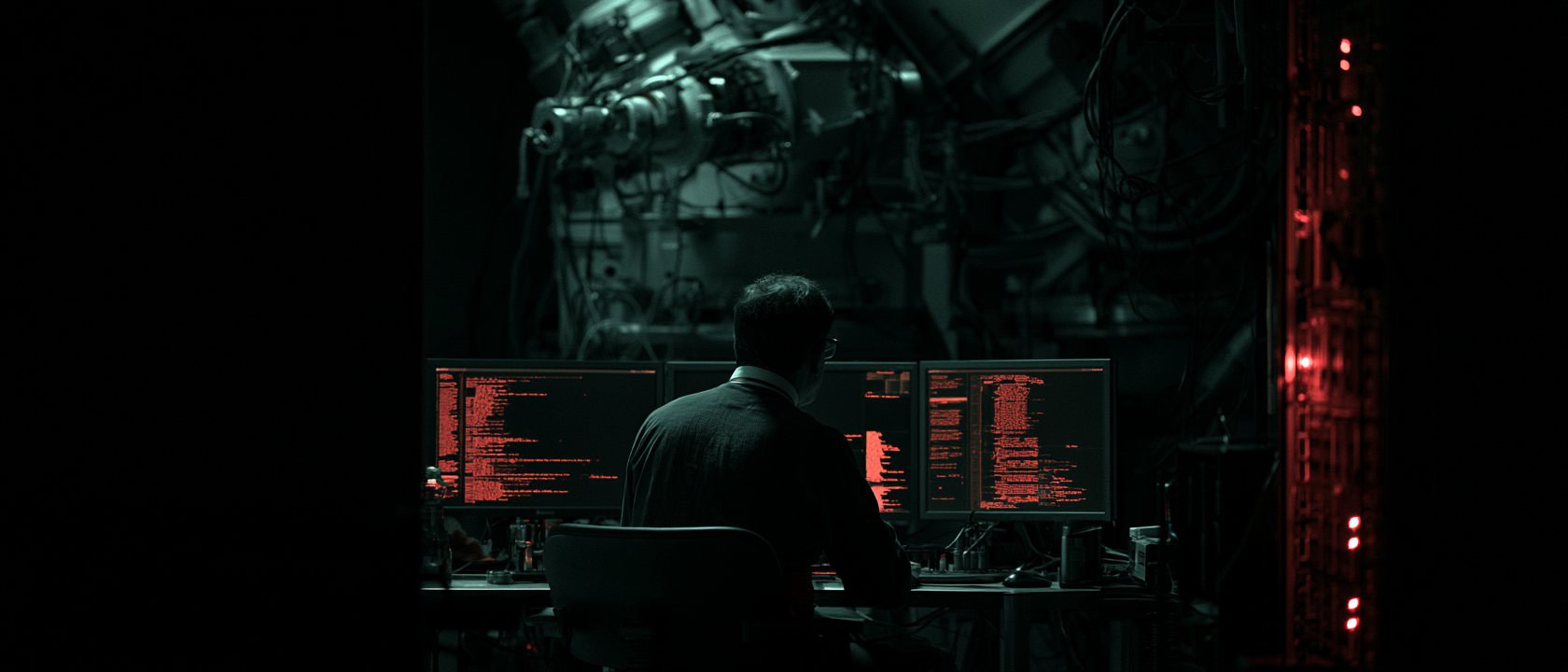
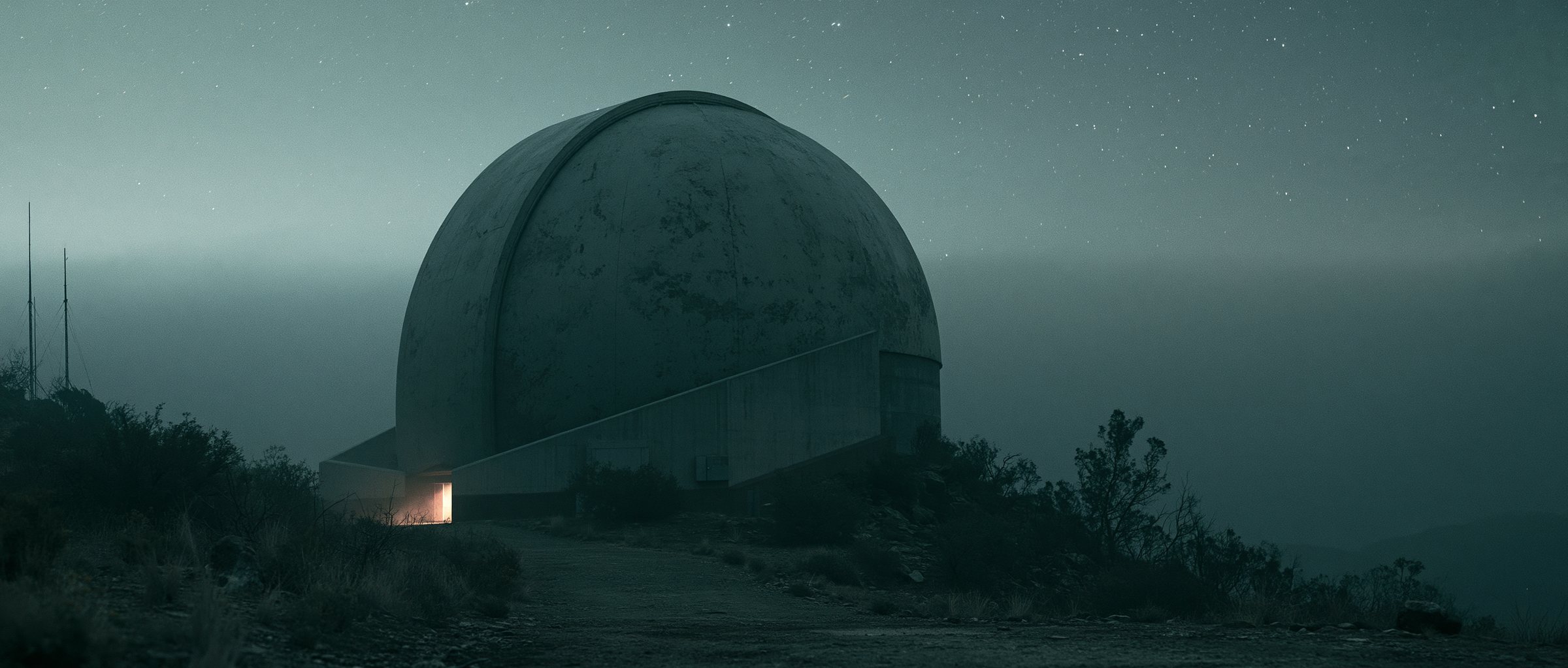
The first leg of his journey leads him to the Vatican Observatory in Arizona, where Jesuit astronomers open up to the lens. They reveal the core of the problem: while delegating calculations to a machine is a triumph, outsourcing human sight and observation threatens to destroy raw wonder. In Rome, Monsignor Paul Tighe of the Dicastery for Culture delivers a striking frontal interview. While he warns that algorithms risk standardizing human thought and isolating consciences through custom virtual tutors, he also strikes a profound note of hope: this new frontier represents an unprecedented opportunity for education. To unlock it, humanity must truly understand these tools and place them at the service of learning, transforming AI from a threat into a powerful catalyst for human flourishing.
Sister Alessandra Smerilli, an eminent economist and Secretary of Czerny's own Dicastery, brings a crucial perspective of social justice to the screen. She demonstrates that while AI can isolate, it can also become the most powerful lever for literacy and equality in history for children in remote regions, provided that private tech monopolies are dismantled.
Armed with these insights, Czerny plunges into the blinding glare of Silicon Valley. In fortresses of glass and steel, he confronts AI architects whose promises of a suffering-free humanity mask a new form of technological idolatry. The documentary searches for the truth where it hurts through deeply personal face-to-face encounters. In a Palo Alto café, a tech whistleblower delivers a raw, anxious testimony, terrified by the mass-manipulation tools she helped build. Via satellite link, a young content moderator in Manila recounts his brutal daily reality, paid pennies to clean web violence so Western AI can appear pure. These direct interviews expose how unregulated AI deepens the cognitive divide and human exploitation.
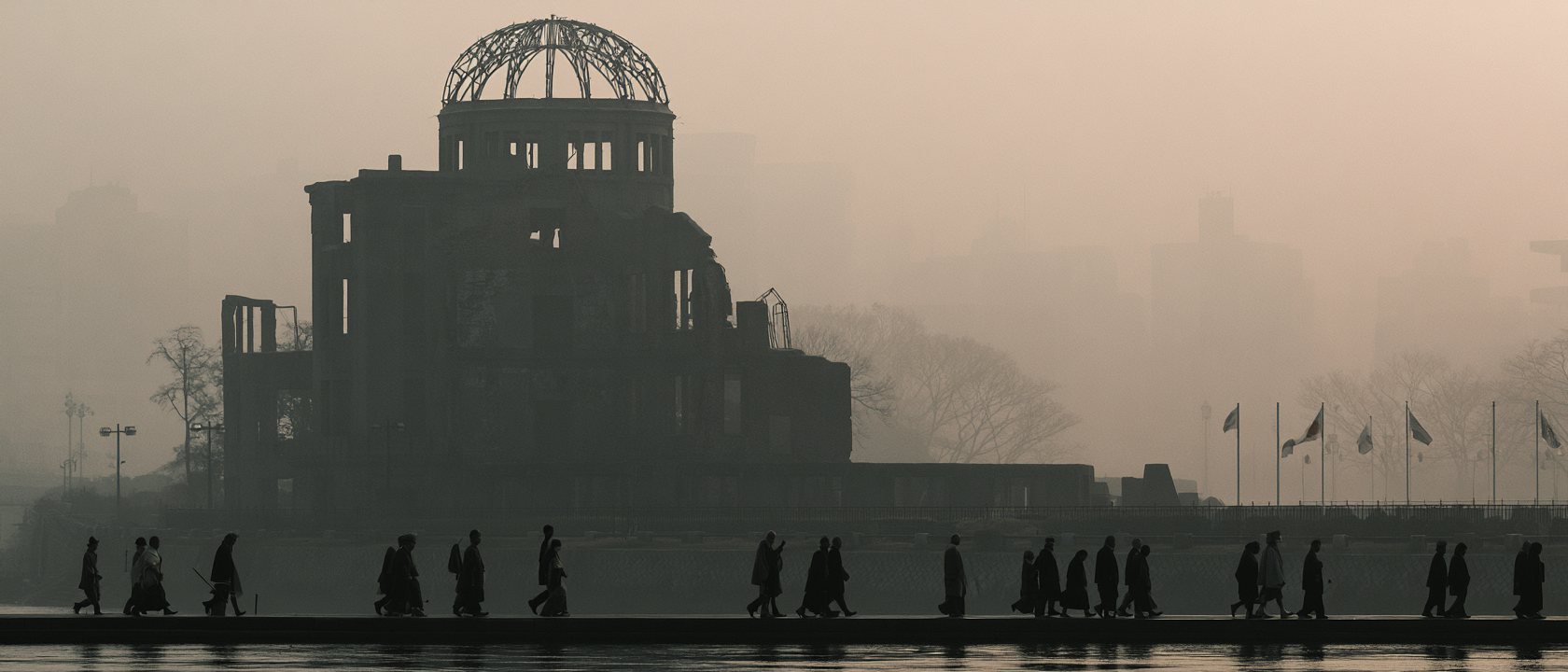
To build a universal shield, the quest expands into a global chorus of faiths. At the Hiroshima Peace Memorial, Buddhist, Shinto, Jewish, and Muslim sages speak directly to the camera, agreeing that computational logic can never possess moral intent or mercy. From this interreligious front rises a magnificent wave of hope, inspired by the biblical allegory of Nehemiah rebuilding the broken walls of Jerusalem. The interviewees reframe this technological crisis as a historic opportunity to rebuild collective effort, uniting scientists, theologians, and citizens to protect the common good.
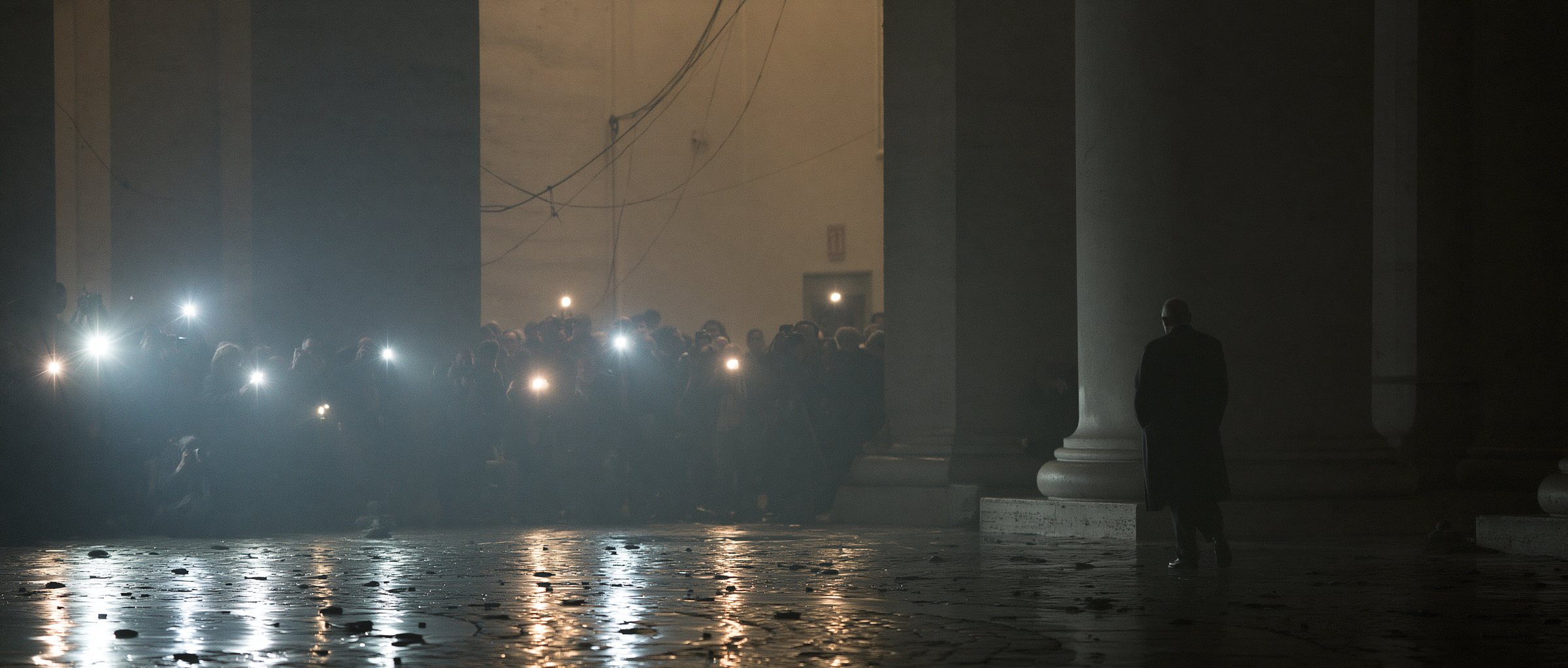
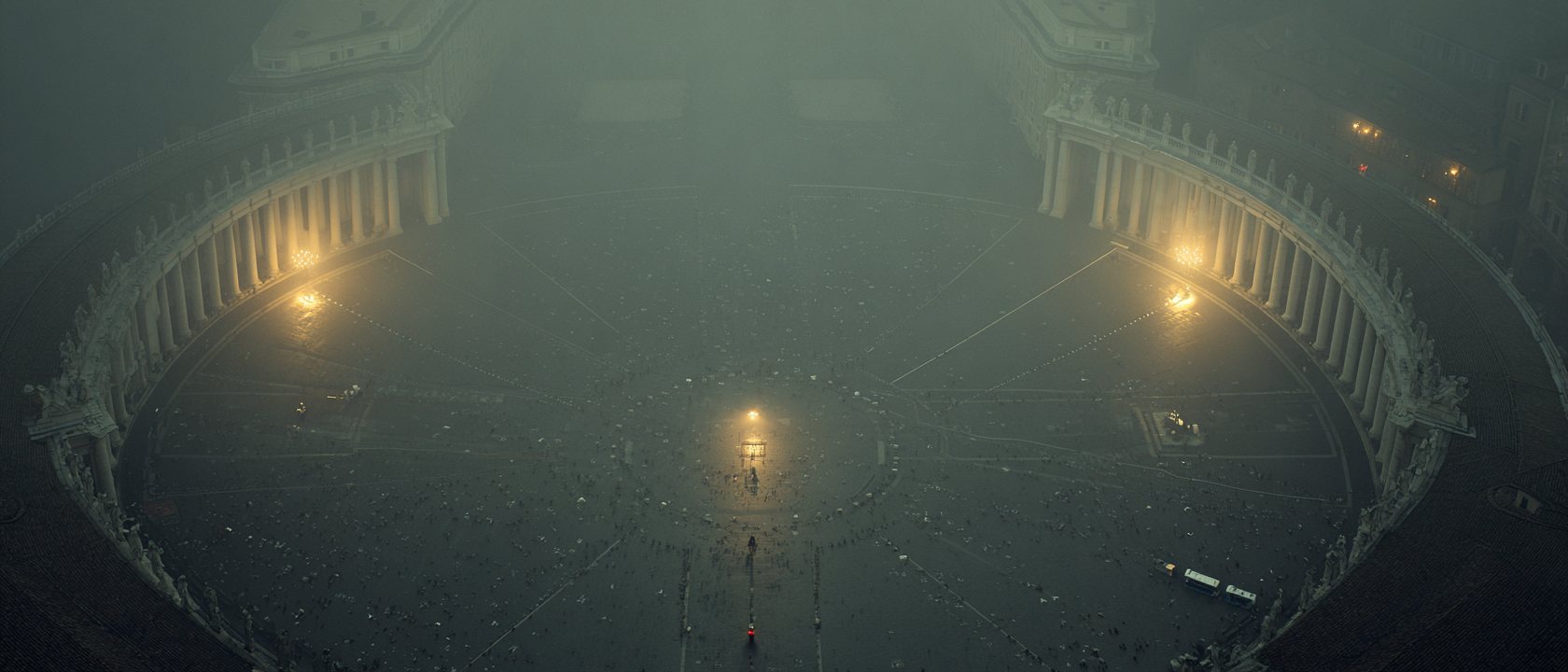
Returning to Rome, the film enters the feverish, closed-door drafting sessions of the Curia. Alongside Cardinal Víctor Manuel Fernández, Prefect of the Dicastery for the Doctrine of the Faith, the text is forged word by word, while Paolo Ruffini, Prefect for Communication, outlines his strategy to make the text a worldwide visual wake-up call. The film culminates at the official global announcement of the encyclical under a storm of media flashes. As the Church sets the ethical boundaries of technology, Cardinal Czerny walks away alone beneath the monumental colonnades of St. Peter's Square. The documentary concludes with his final frontal interview, carving his ultimate message into the century: the direction of artificial intelligence is not written into the machine itself but depends entirely on our responsible choices, and in the age of the algorithm, mankind must still assume the magnificent risk of loving and deciding.
The world watched the announcement. No one has seen the road.
On 25 May 2026, the Holy See released Magnifica Humanitas, the first papal encyclical on artificial intelligence. It led bulletins on every continent within the hour. The document is public. The journey behind it is not.
MAGNIFICA HUMANITAS is the inside story of how the oldest institution on earth drew a frontier around the newest power on earth, told at walking pace, in the rooms where the text was forged.
No narration. Two voices only.
The film traces this intellectual and spiritual quest, captured live without a traditional narrator, guided entirely by the Cardinal's intimate mental voice and a series of powerful, frontal face-to-camera interviews with key global players.
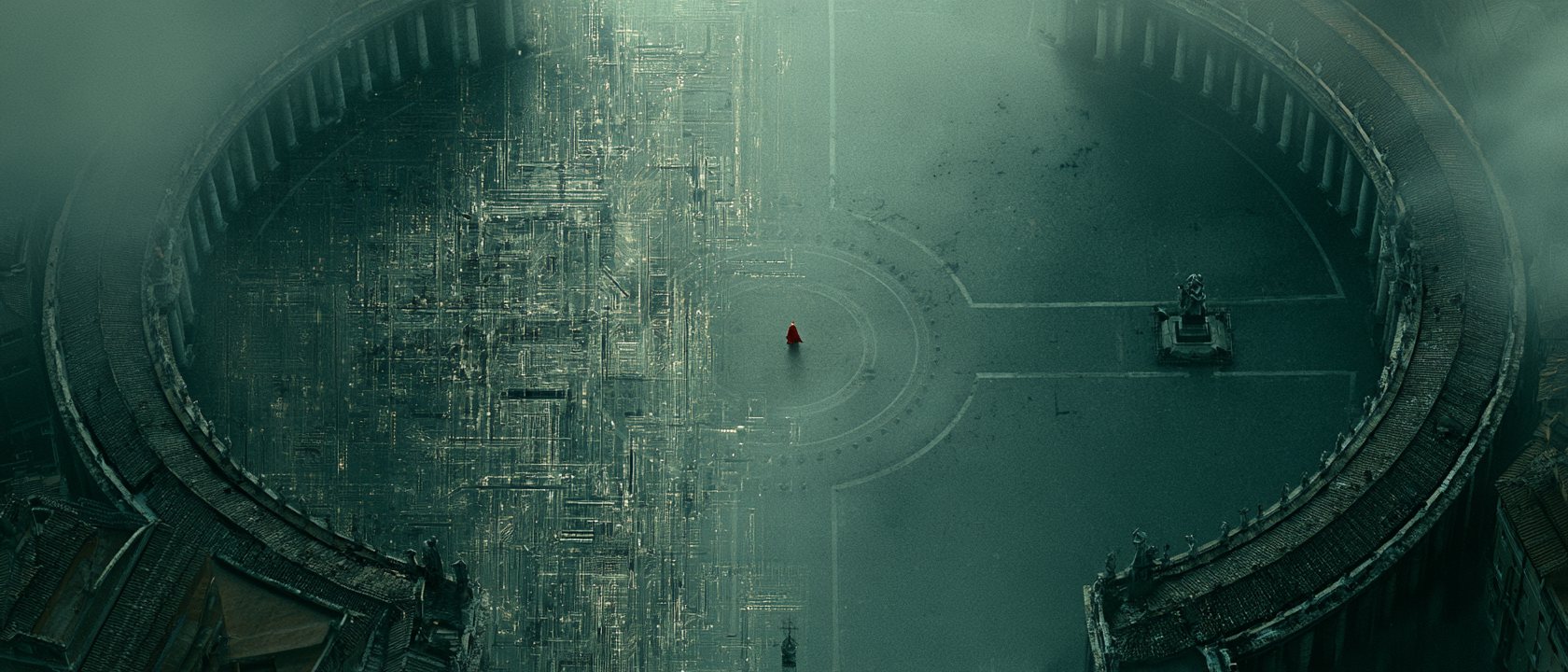
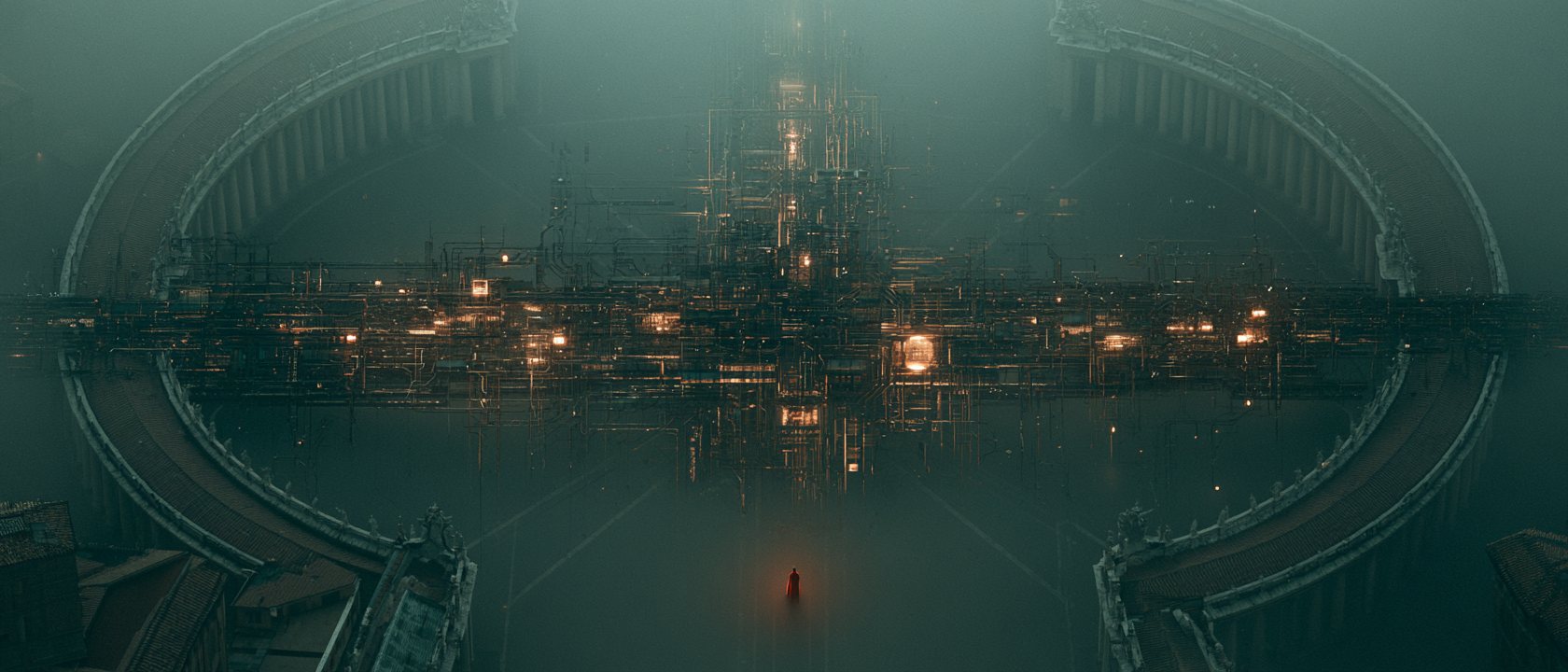
The oldest network on earth is about to rule on the newest.
Fourteen stations.
Five horizons. One text.
The Silence of the Stones
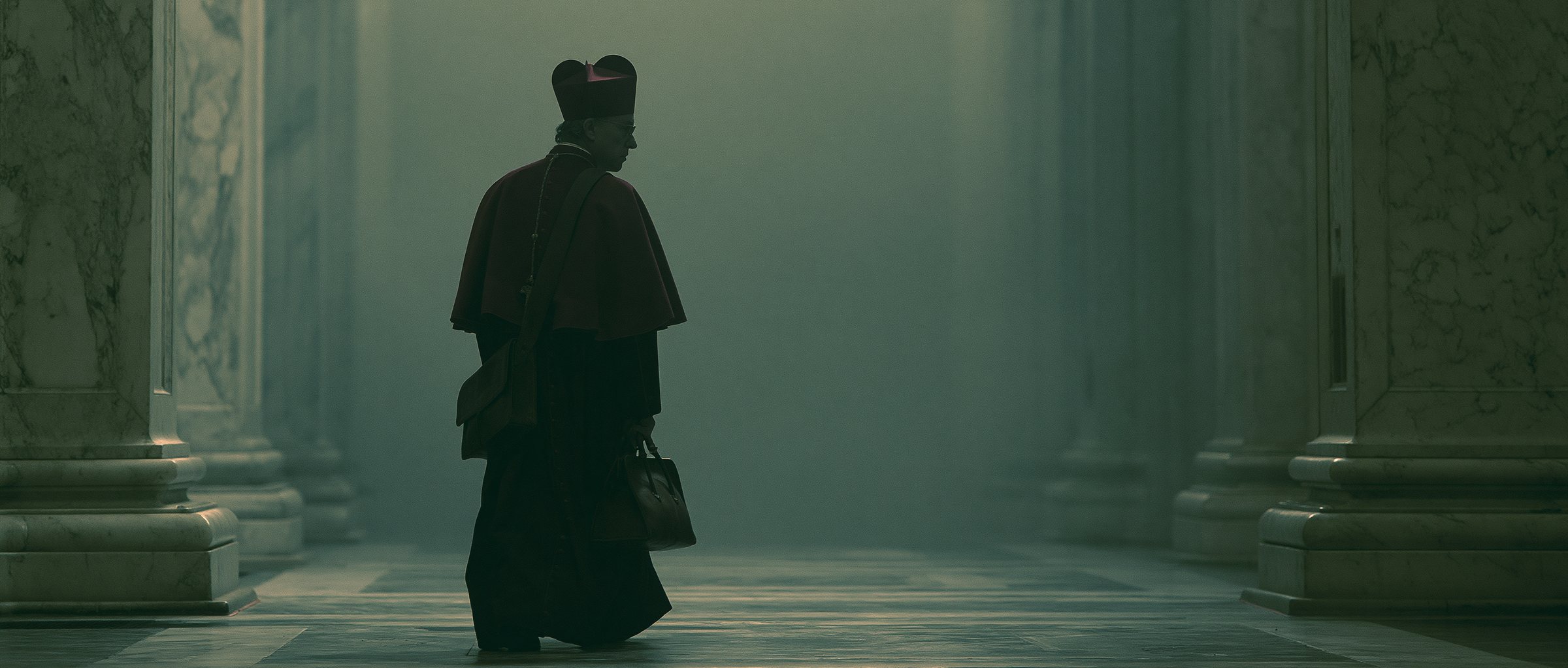
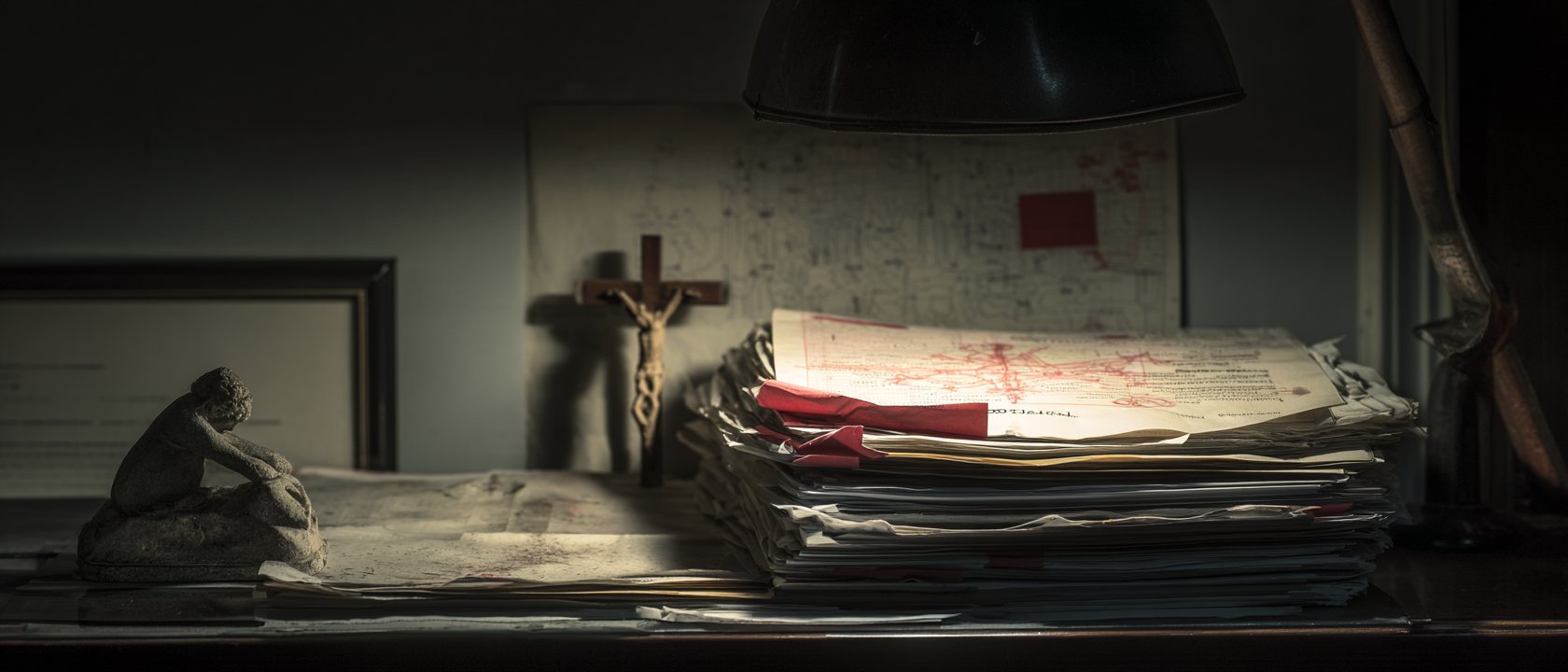
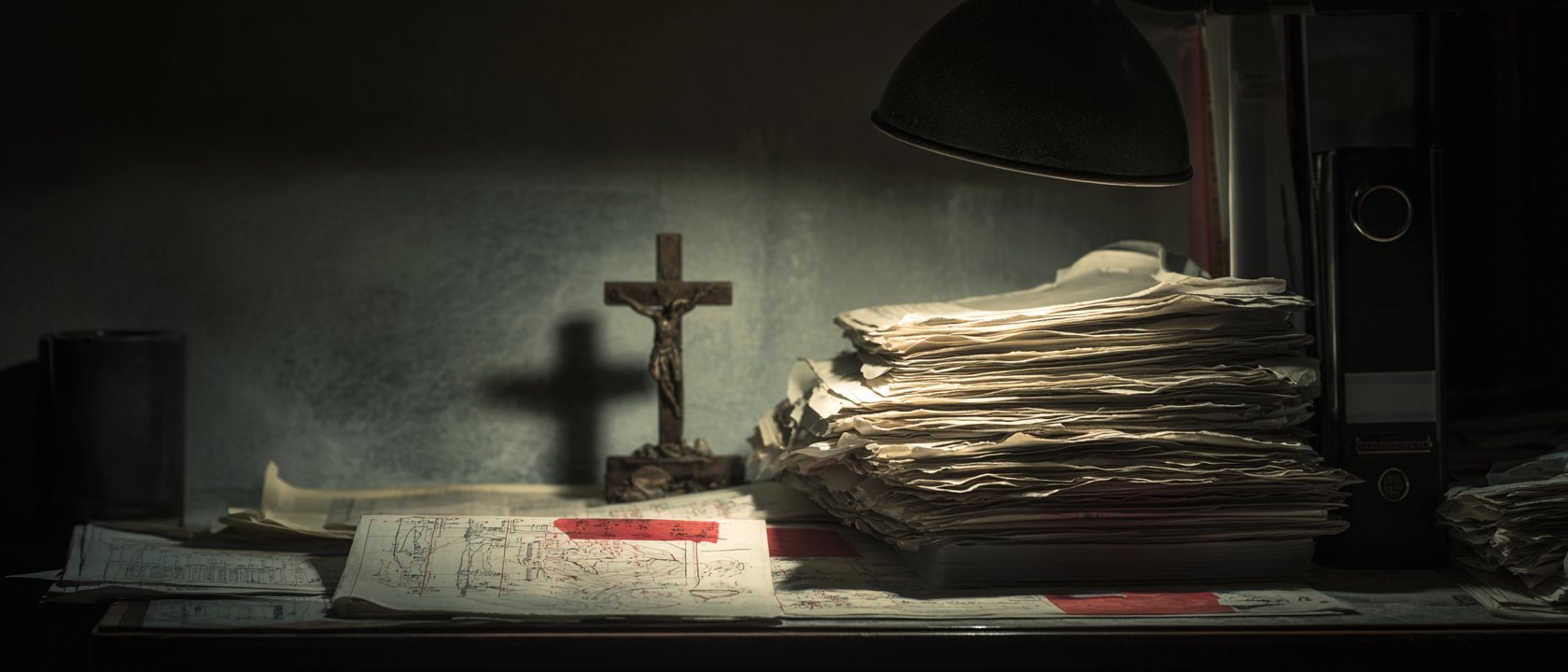
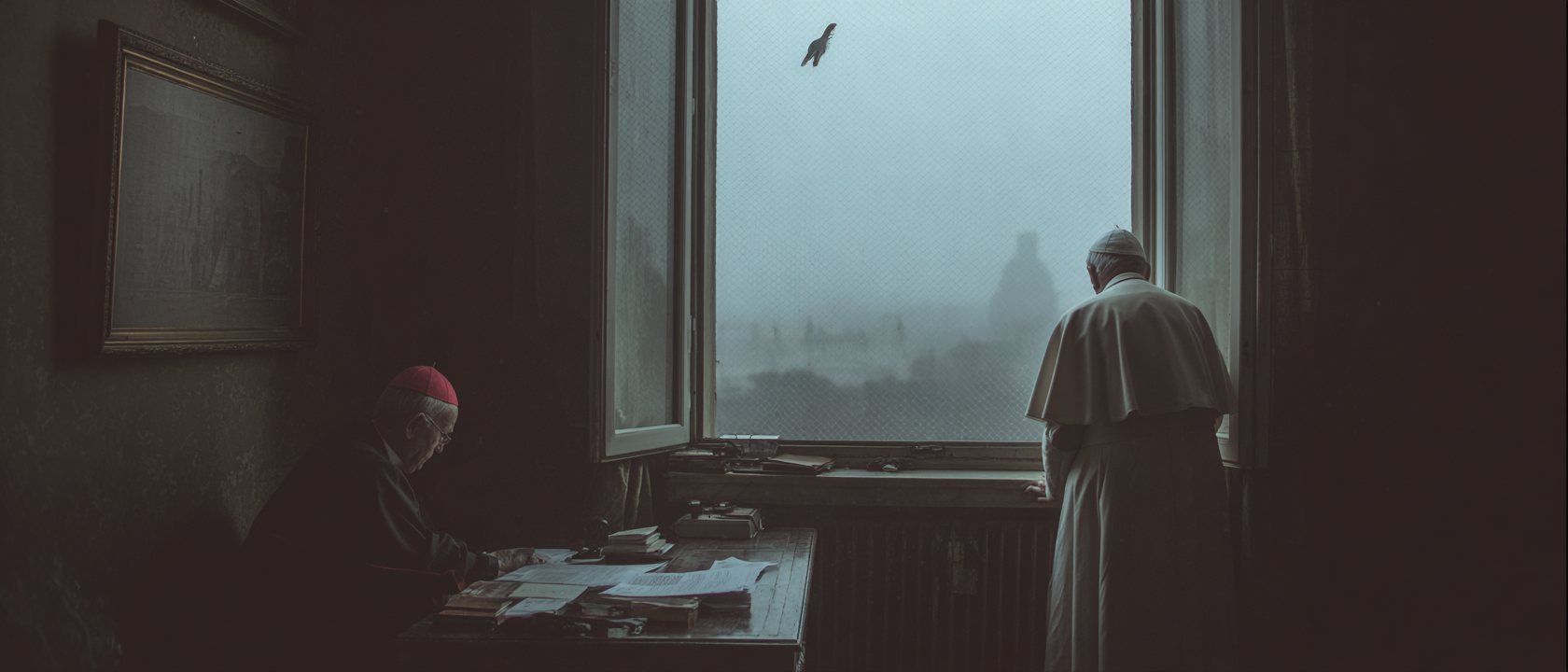
Cardinal Czerny walks alone, a heavy briefcase under his arm, illuminated by the pale glow of security nightlights. On his desk, a stack of technical reports sits next to a rough wooden crucifix. Not a word is spoken.
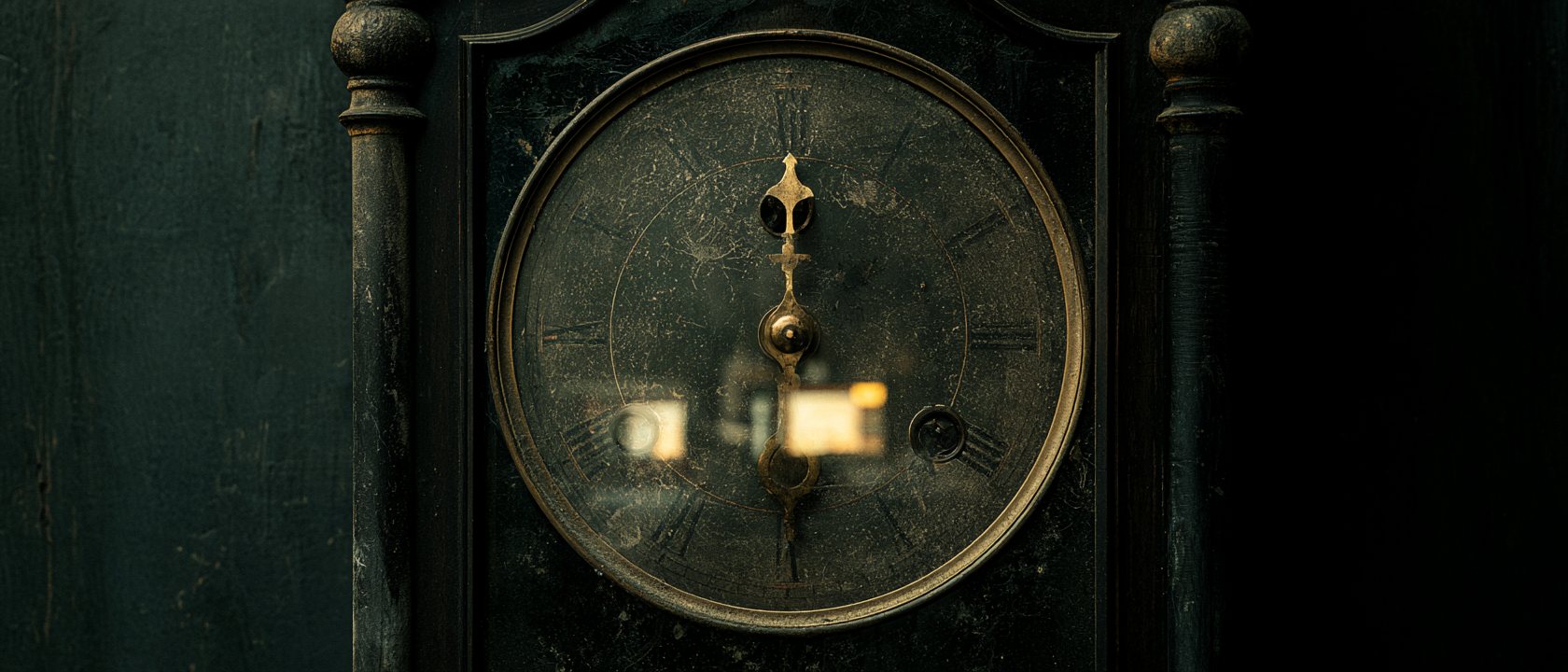
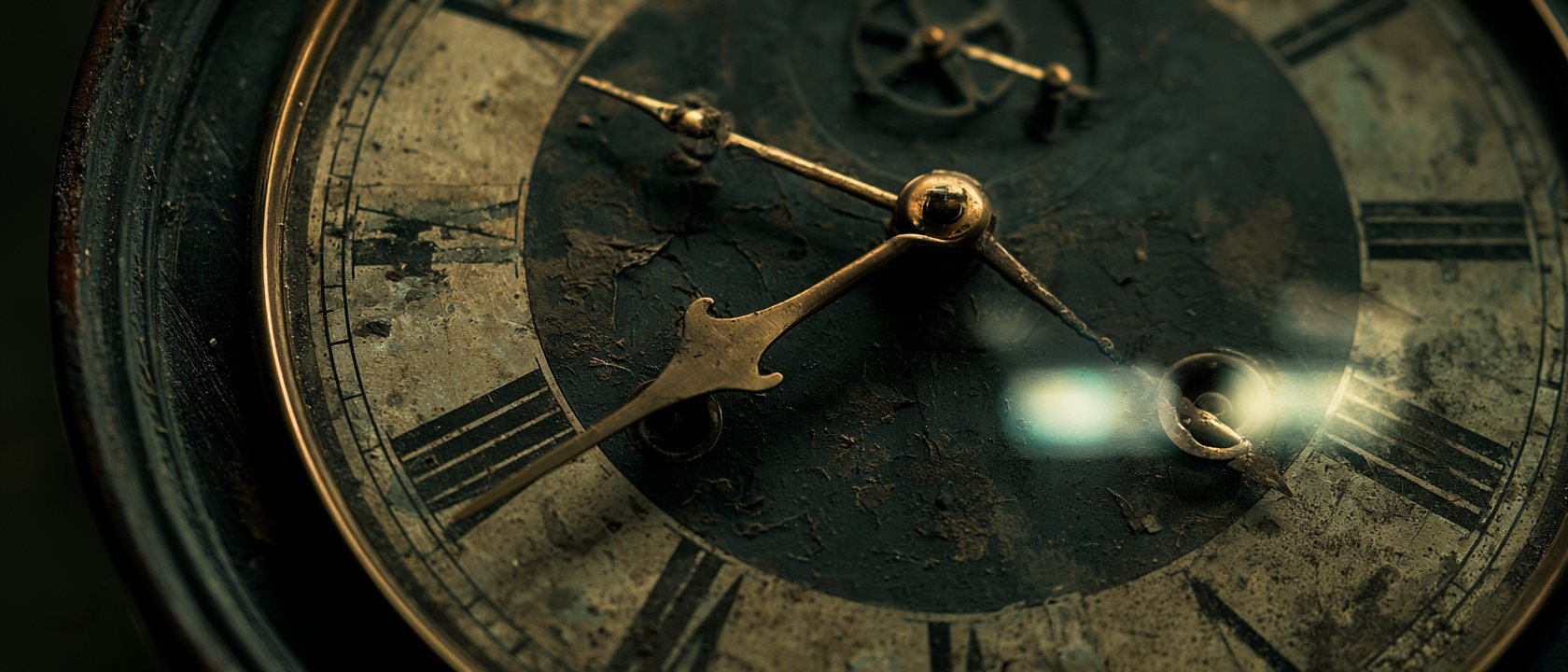
A visual pause takes hold, fixing on the steady ticking of a grandfather clock that suddenly seems to measure the countdown of another era.
The Mandate of the Library
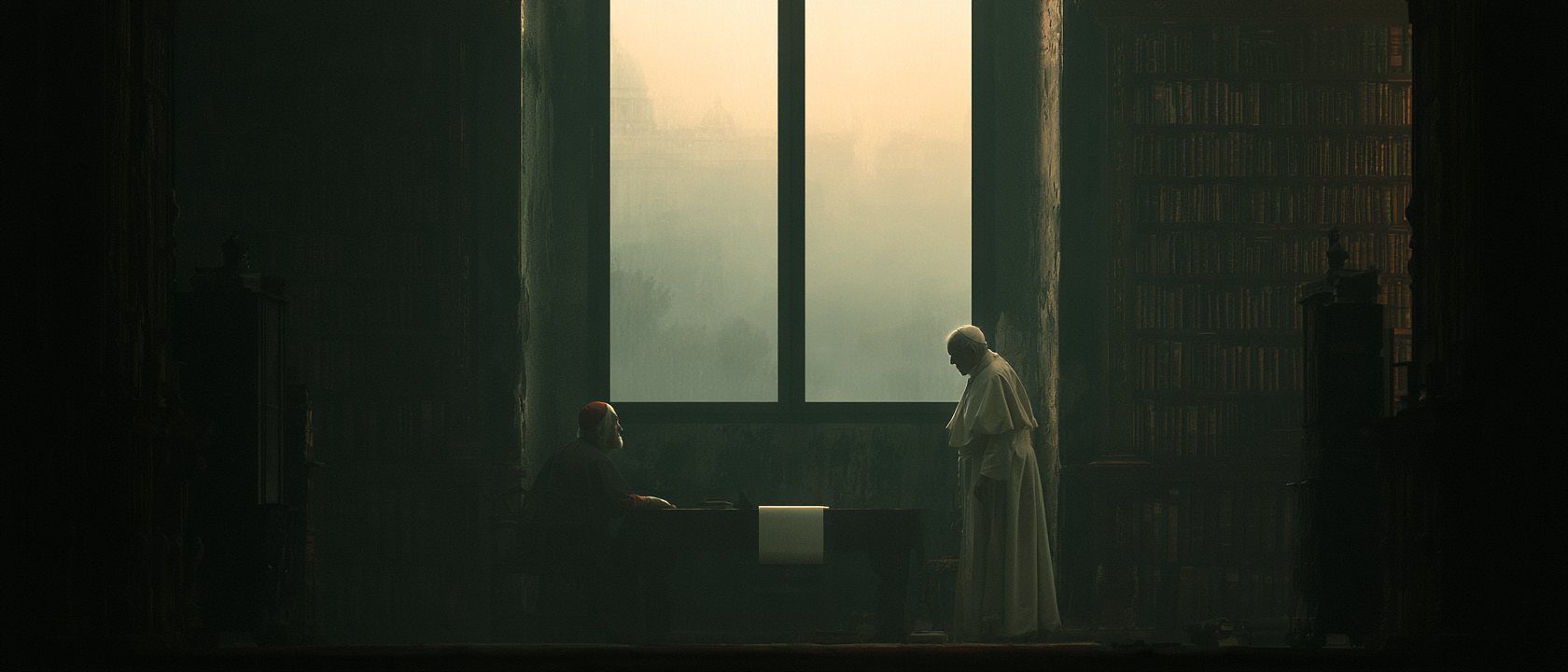
Michael, our predecessor Leo XIII wrote about the condition of workers when factories began to devour bodies. Today, machines are attacking the soul, the freedom of choice, the very nature of truth. Go see what they are manufacturing in that valley of glass. Talk to their engineers, listen to their dissidents, and come back and tell me if man still has a place there.The Pope
Face-to-Face on Digital Culture
What we are experiencing is not a simple technical transition; it is a profound anthropological mutation that is redefining human culture. If we allow algorithms to format the expression of thought, beauty, and relationships, we risk witnessing a cultural desertification where standardization replaces the uniqueness of divine creation.Monsignor Paul Tighe · Dicastery for Culture
Our role at the Dicastery for Culture is to ensure that the screen remains a window open to the other, and not a narcissistic mirror that isolates us.Monsignor Paul Tighe
The Monks of Code in Arizona
Artificial intelligence sorts the light of the stars, eliminating the background noise of the atmosphere in three microseconds. What used to require months of calculation is now done in a single breath of the machine.The Astronomer of the Specola Vaticana
If the machine decides what is worthy of being seen, it kills spontaneous wonder, and without wonder, the dialogue between science and faith dies.The Astronomer of the Specola Vaticana
The Shock of Silicon Valley
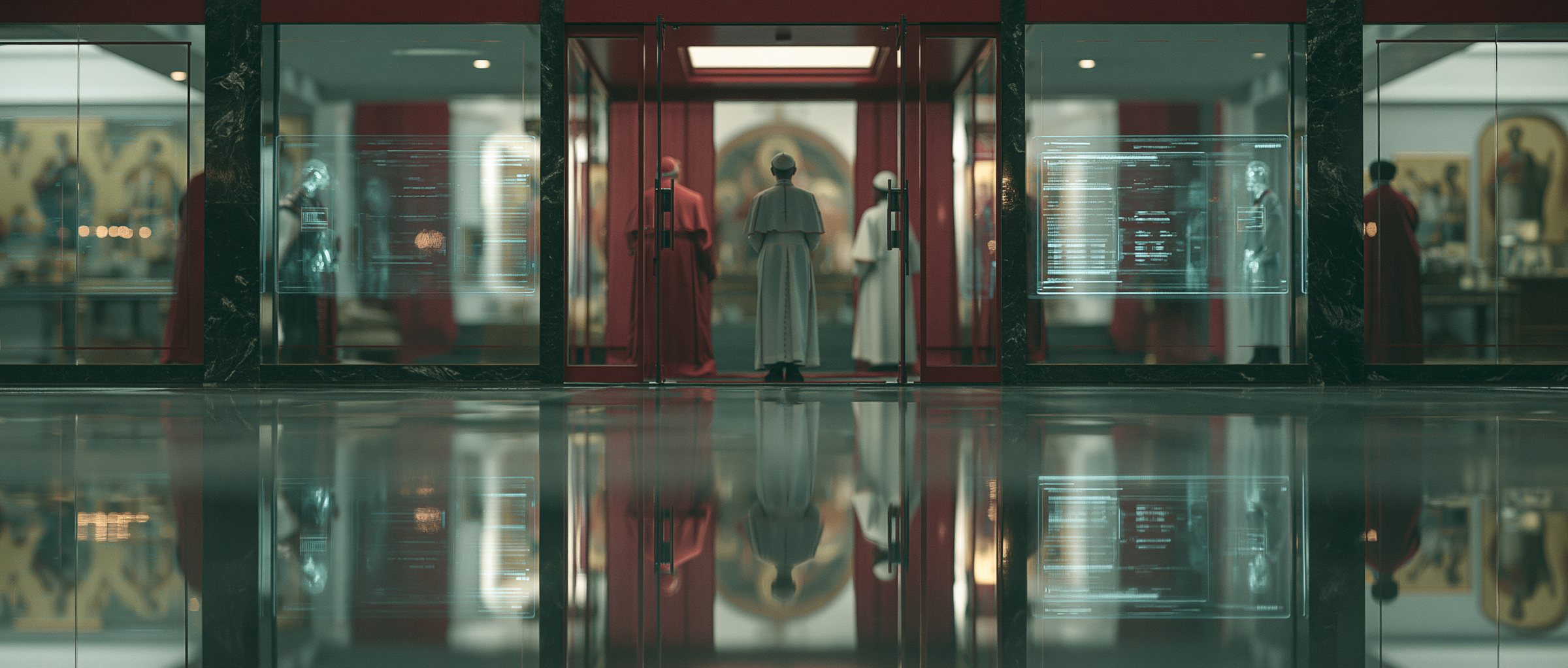
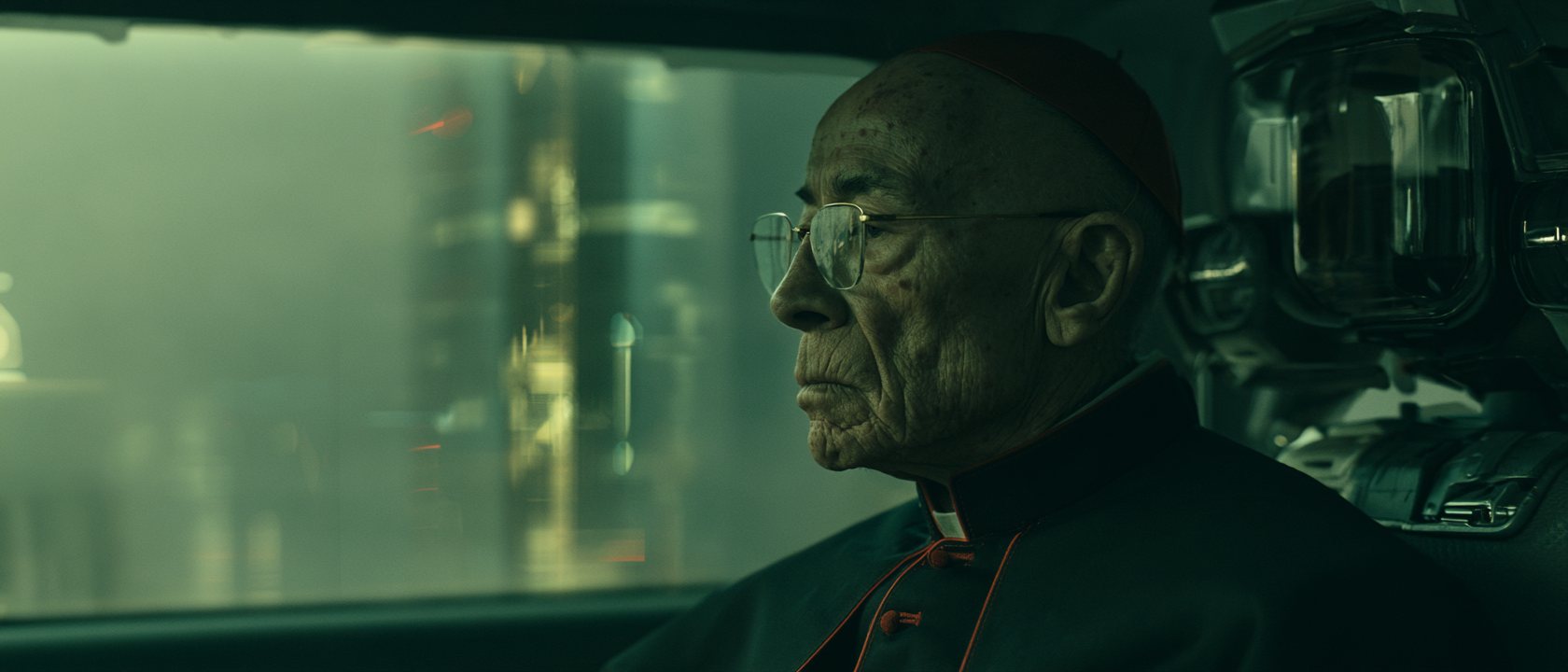
The landing in San Francisco is brutal. The reflections of trees and glass buildings cross his impassive face. He steps out in front of an ultra-modern campus, a true fortress of glass and suspended vegetation.
We are not creating a simple tool for economic optimization; we are building the infrastructure of the future human consciousness. Our language models don't just translate; they anticipate desire, they resolve ethical complexity by eliminating human bias. We are repairing the imperfections of history.The Director of AI
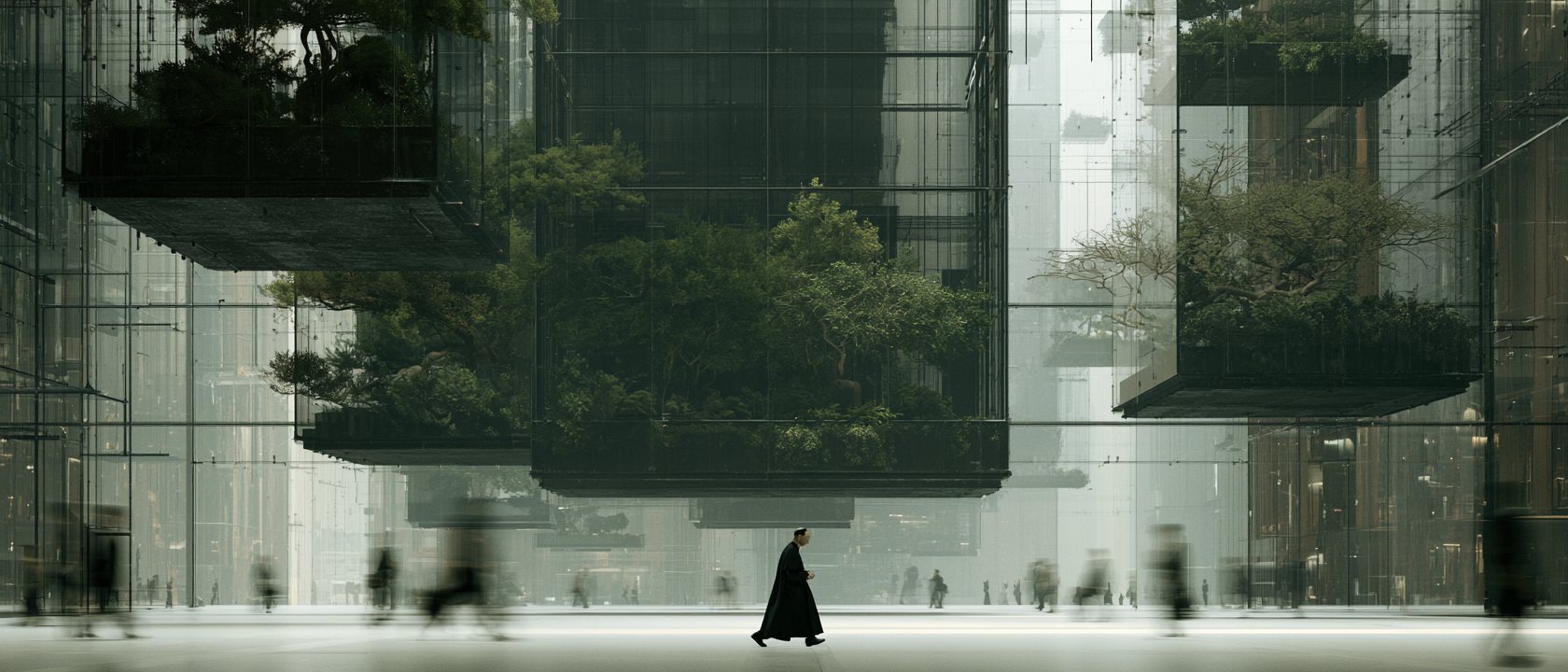
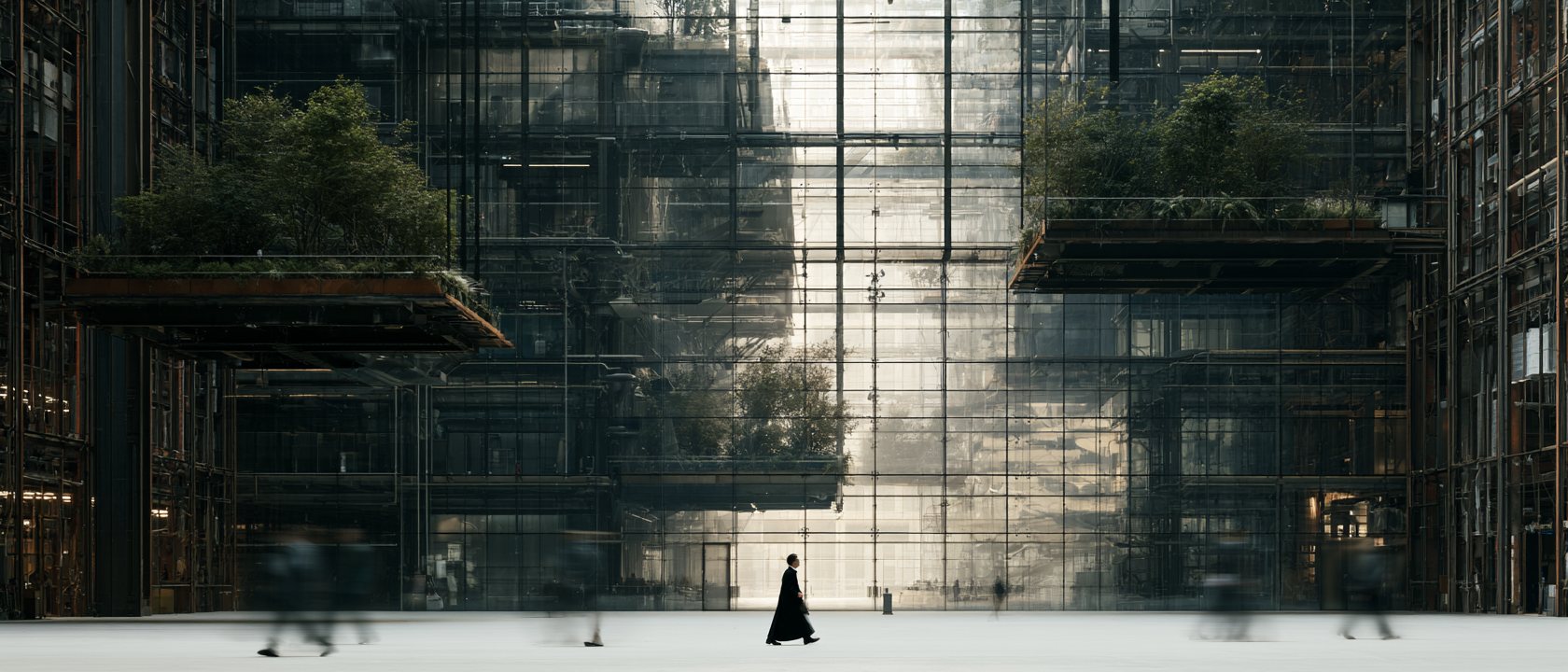
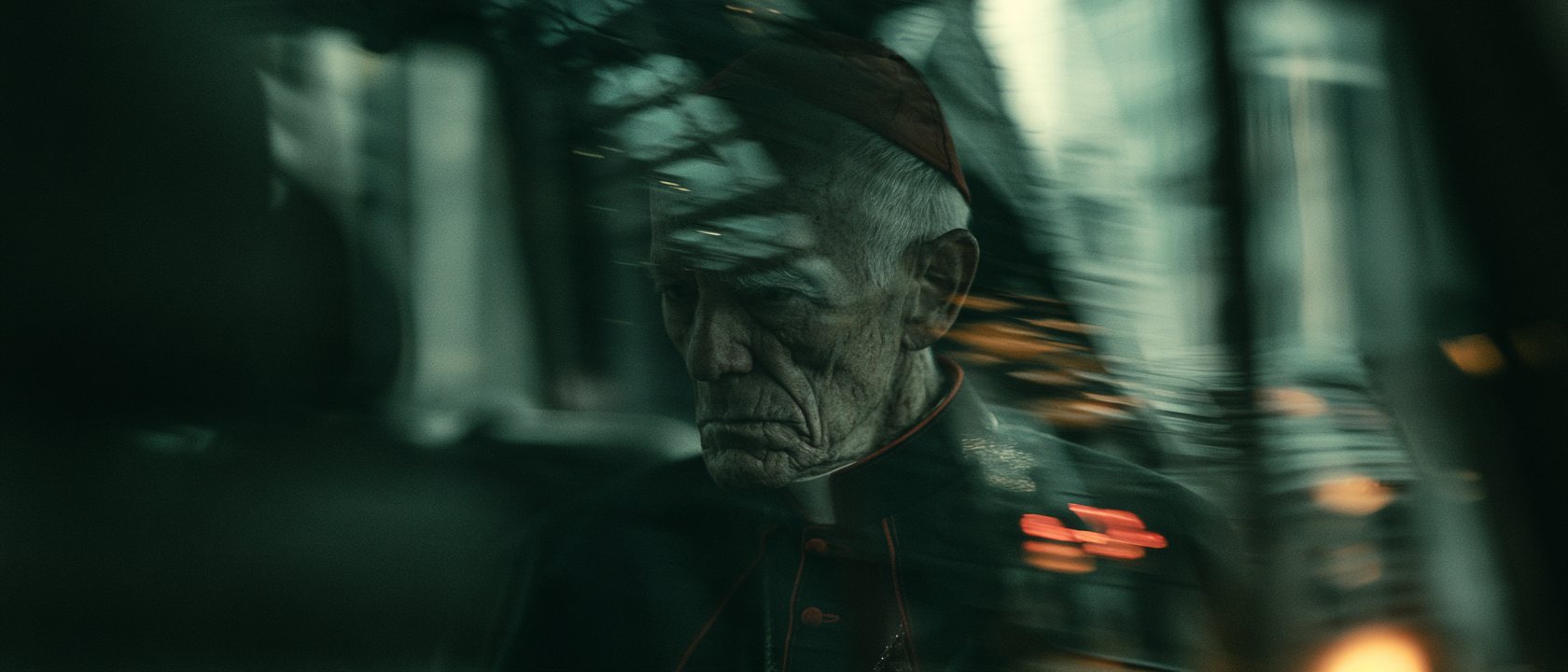
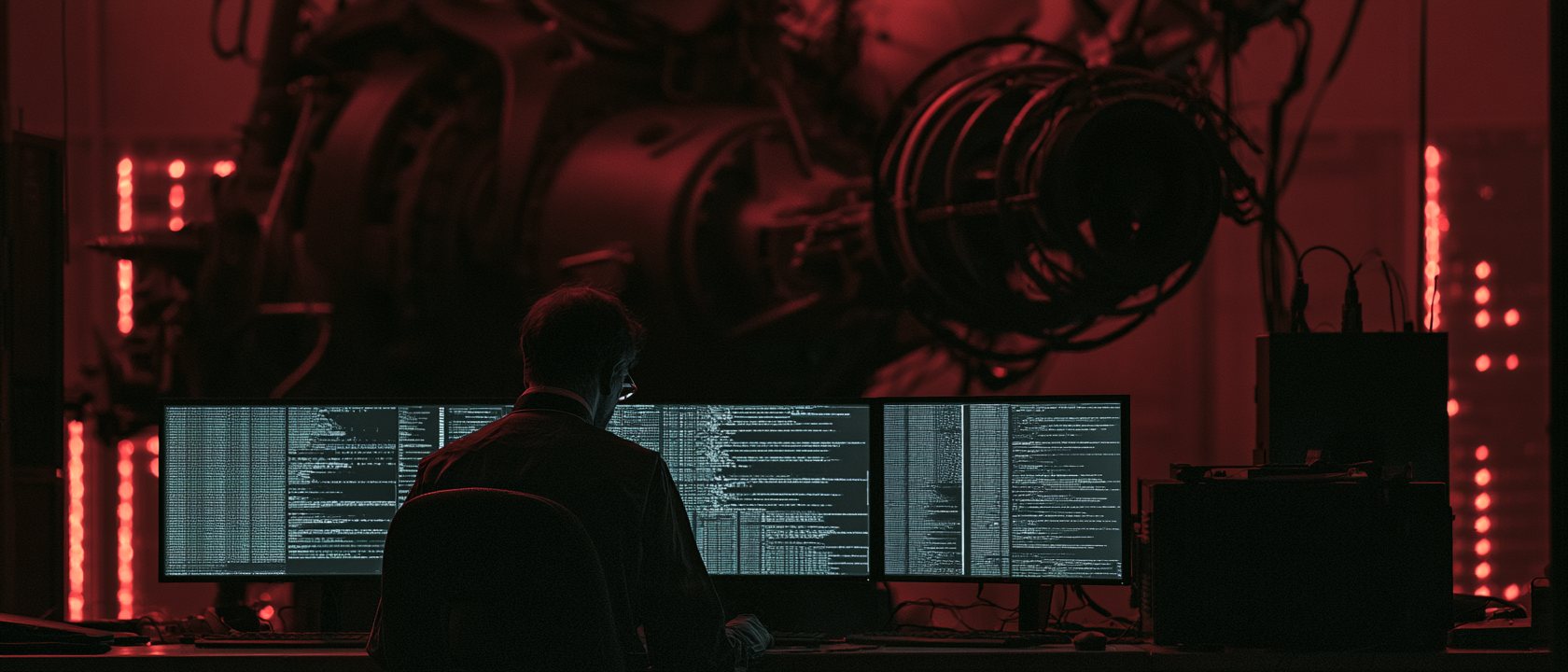
This man speaks of AI as a new clergy and of the algorithm as a technological grace. They do not seek to improve the human condition; they want to replace it with a version free of suffering and mystery.
Witnessing the Communication of Truth
If the machine generates perfect images and narratives, our duty is to show the magnificent imperfection of Man. The cinematic documentary, through its capacity to capture silence and listening, is the perfect antidote to the frenzy of synthetic information streams. We must make this encyclique a global visual event to awaken consciences.Paolo Ruffini · Prefect for Communication
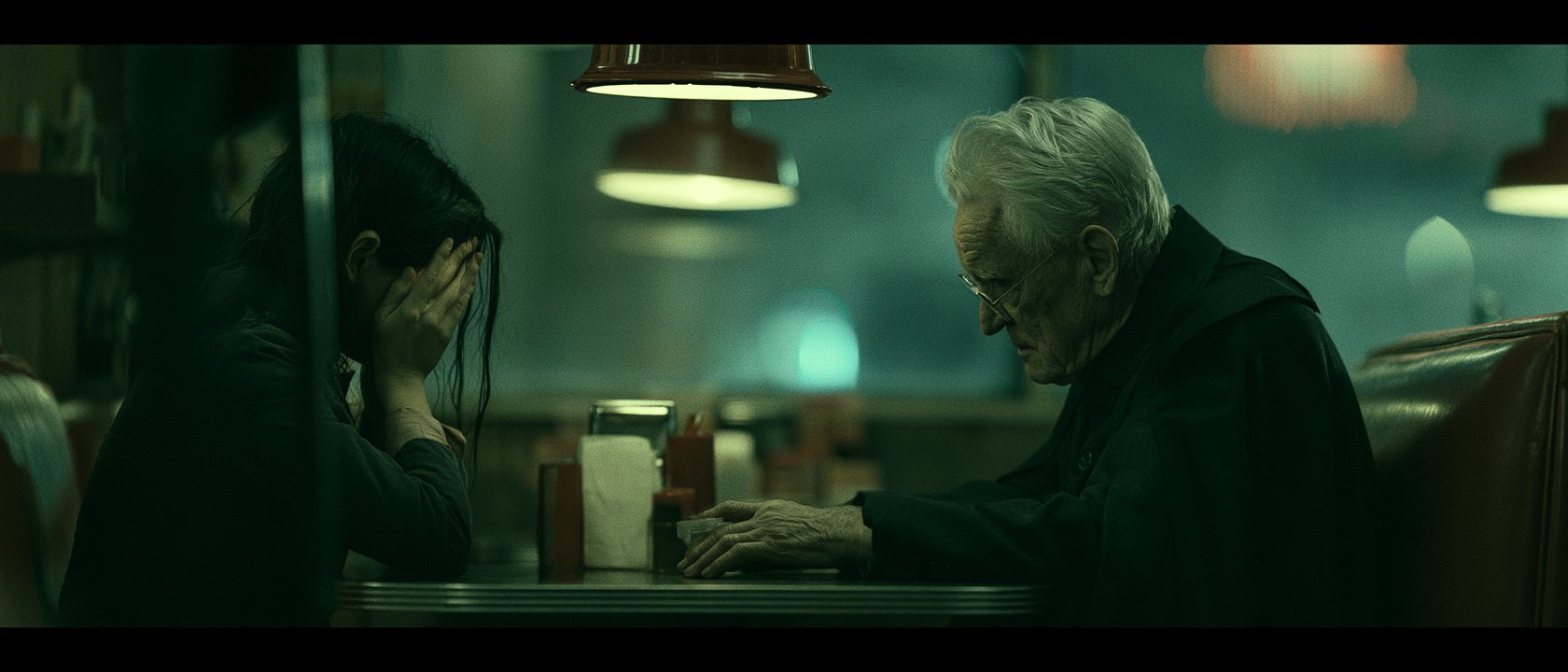
Confessions from the Palo Alto Café
We trained these neural networks on the entirety of humanity's written output, the best and the worst. Now, the machine spits out a synthetic truth that no one can distinguish from reality anymore. I saw models begin to generate their own criteria for evaluating human morality. When I alerted management, I was told that progress could not stop for metaphysical scruples.The Dissident Engineer
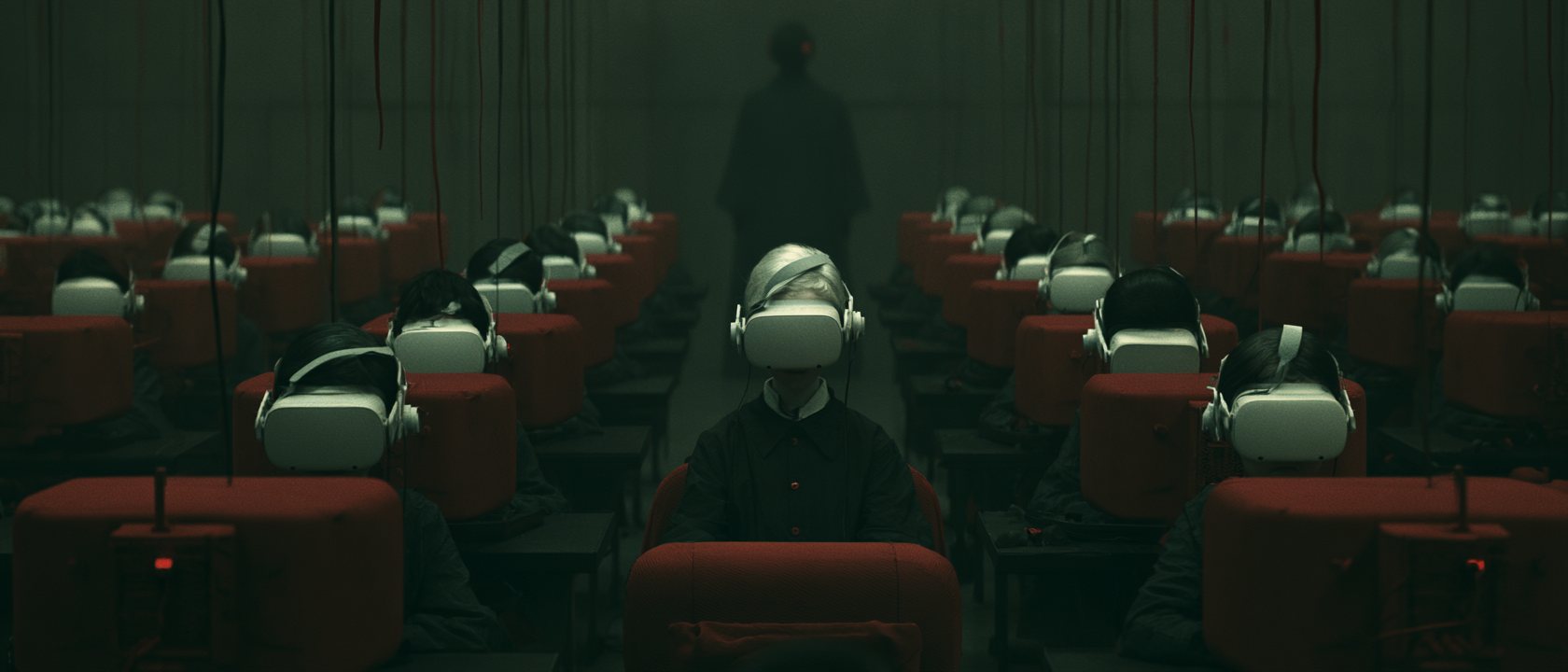
The Classroom of the Future and the Mourning of Transmission
To educate is not to stuff a brain with optimized data; it is to awaken freedom through an encounter. When a human teacher looks at a struggling student, they do not calculate a performance curve; they make an act of faith in that child's potential.Sister Alessandra Smerilli · Economist, Secretary of the Dicastery
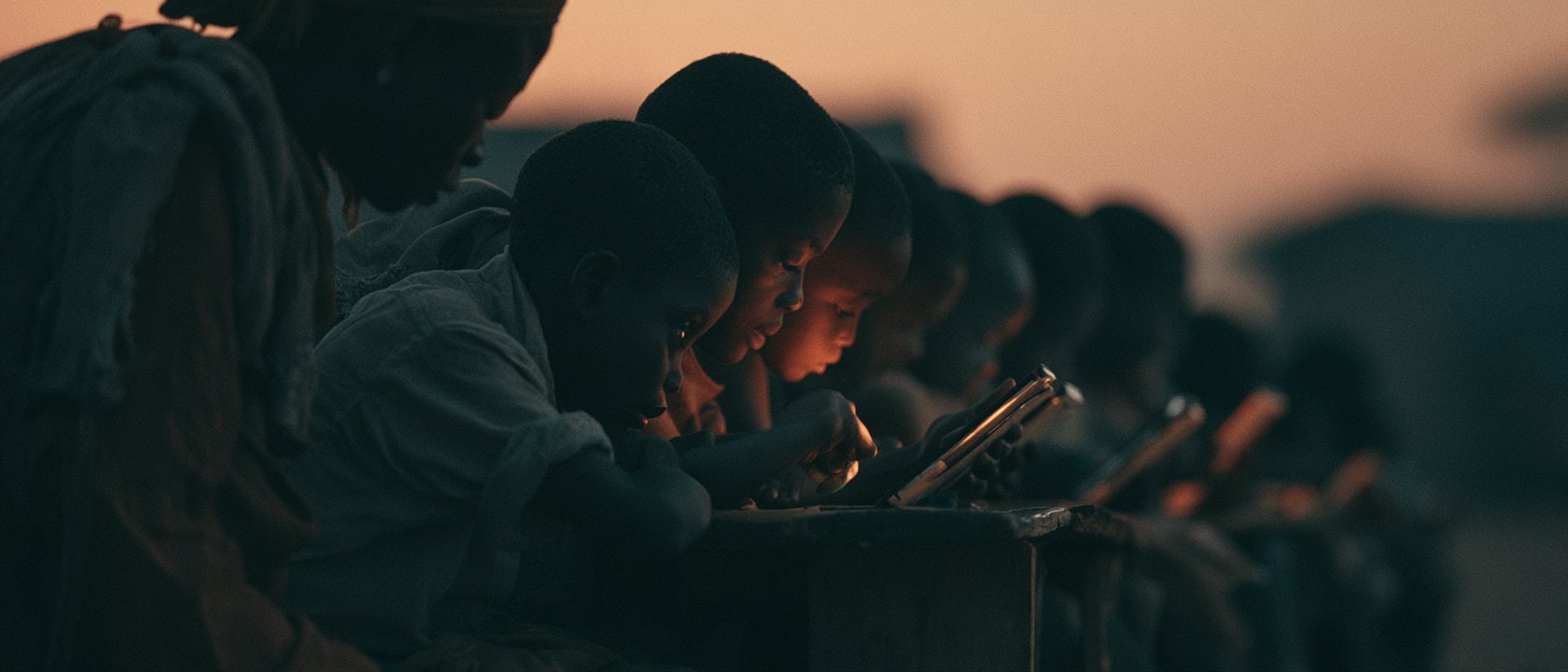
Ethical Discernement
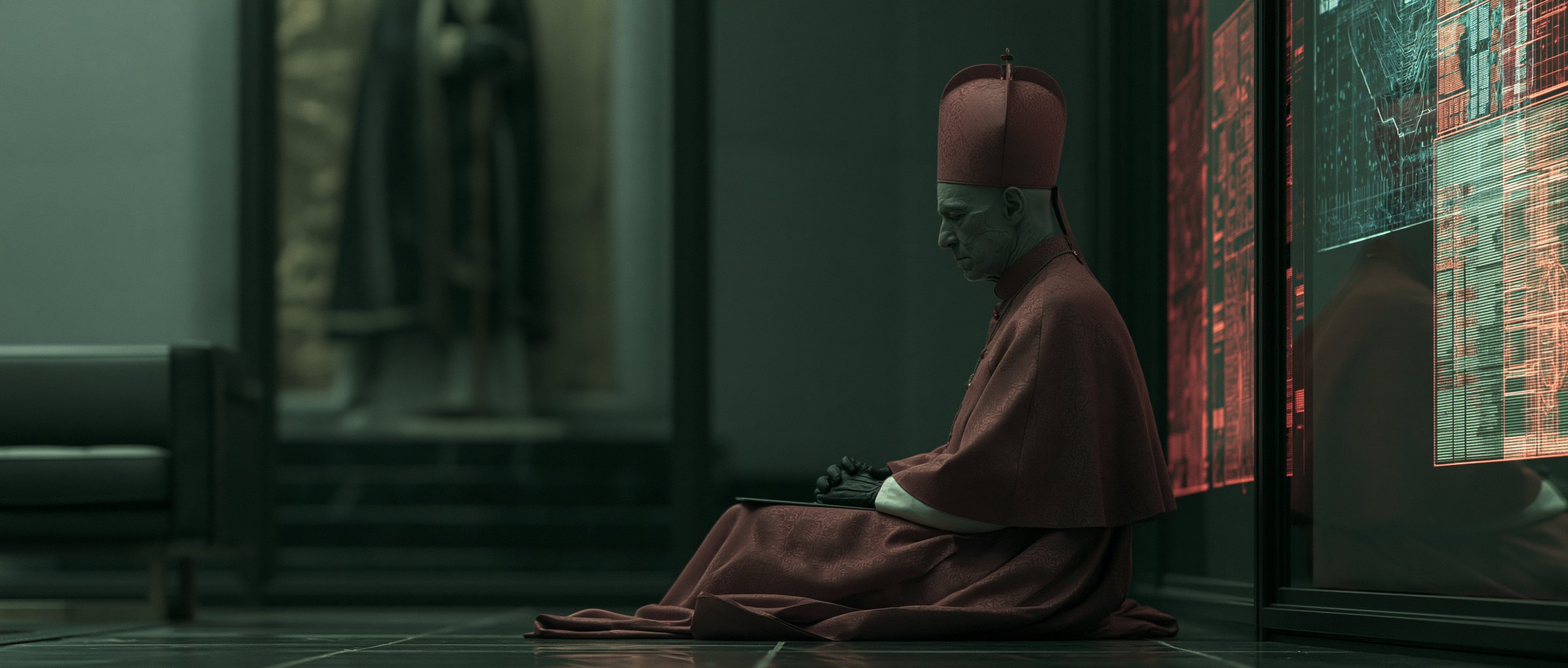
The AI of tomorrow must be a tutor for technical skills, in order to give back to school its sacred mission: forming the heart, critical conscience, and fraternity. Progress is a gift from God, on the sole condition that it does not create an aristocracy of knowledge, but elevates the humblest.Cardinal Michael Czerny
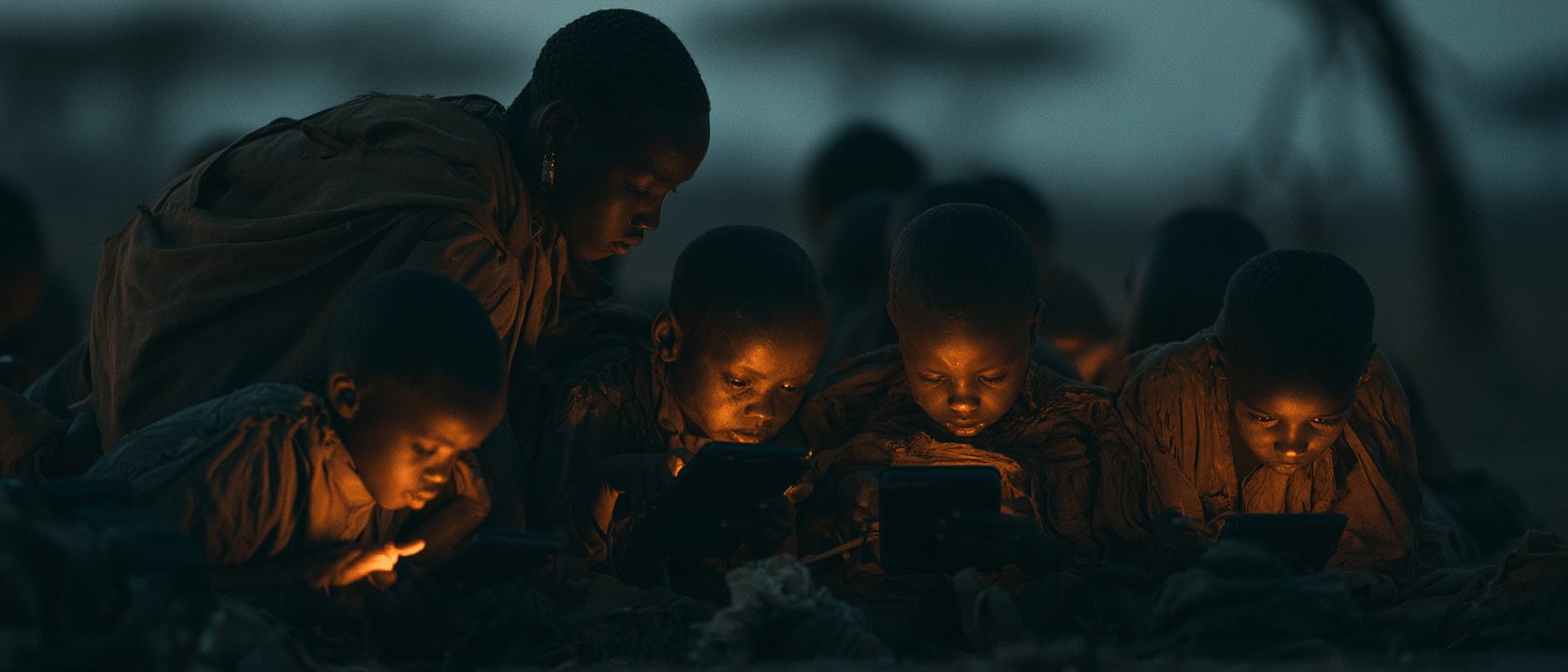
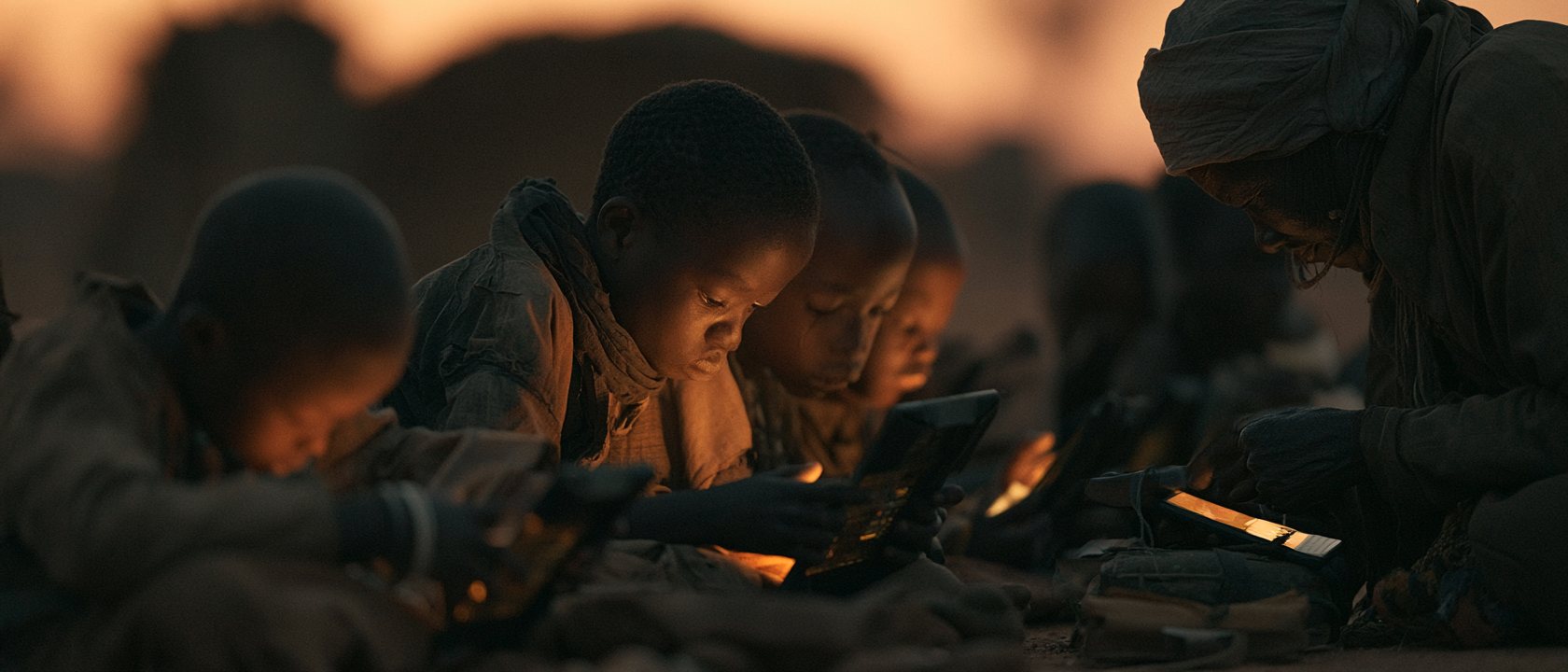
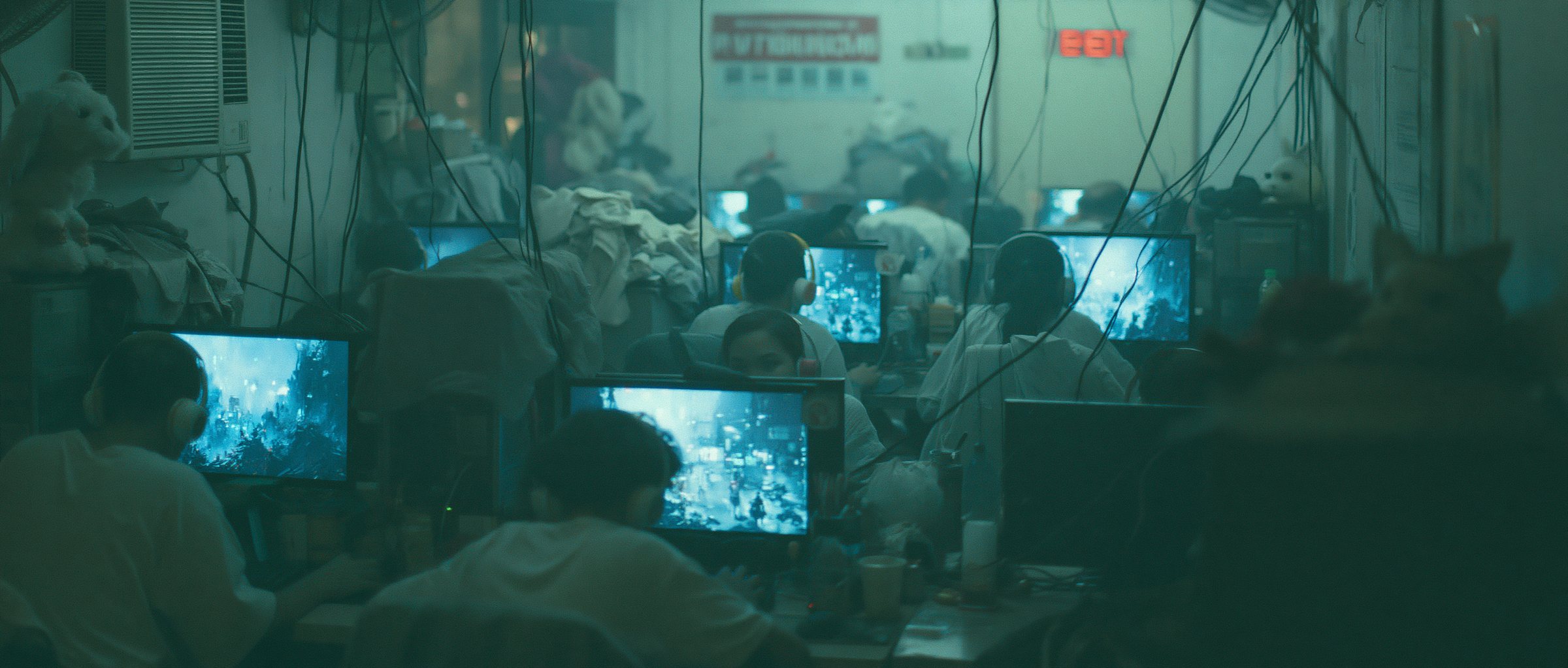
The Shadows of Manila
We are paid two dollars an hour to clean the filth of the world so that users in Silicon Valley can believe the machine is pure and polite. Our minds are broken, but to the machine, we are just annotation labor, invisible and replaceable.The Content Moderator
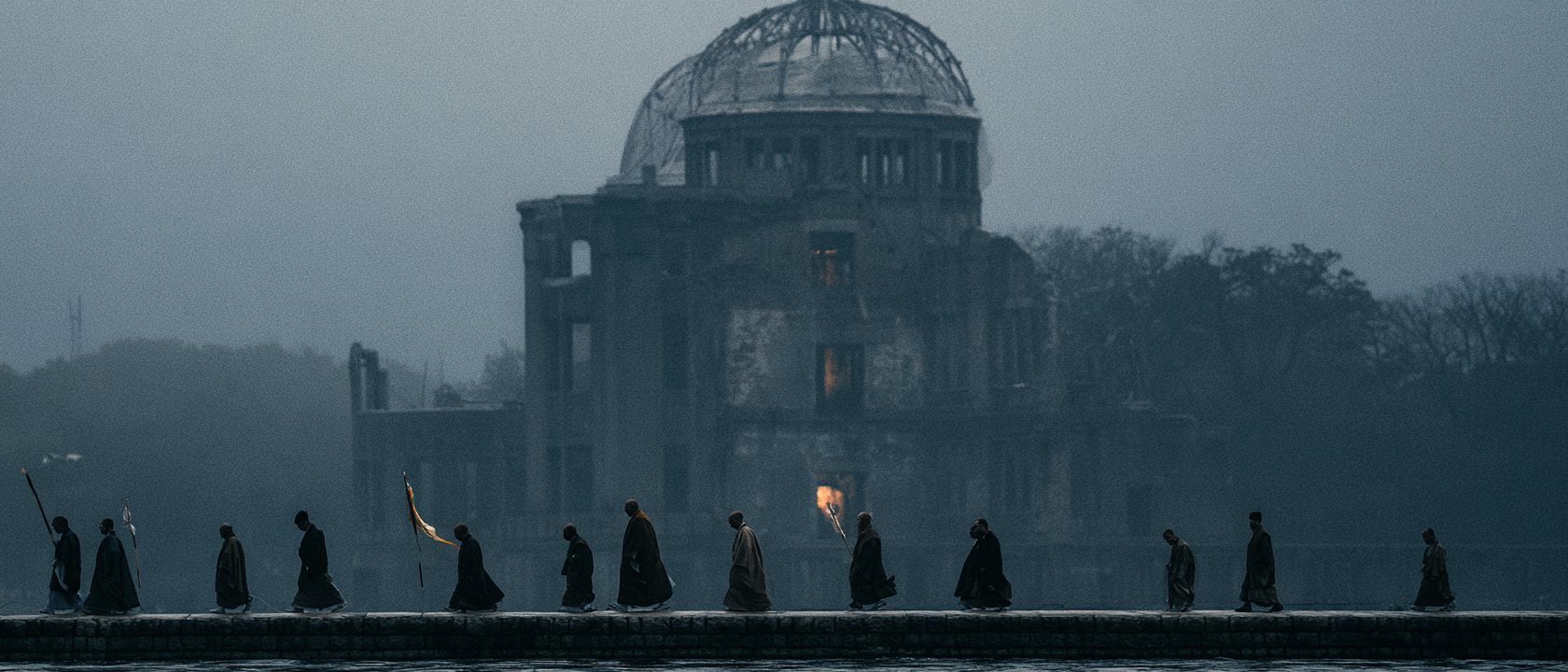
The Front of Beliefs in Hiroshima
Technology disconnected from human conscience already destroyed this city by the atom in an instant. Artificial intelligence carries a more diffuse but equally radical threat, that of destroying the human spirit through the illusion of effortless perfection.The Buddhist Master
Computational logic will never know the concept of mercy or moral intention. We must fix the sacred frontier of the human together.The Sunni Imam
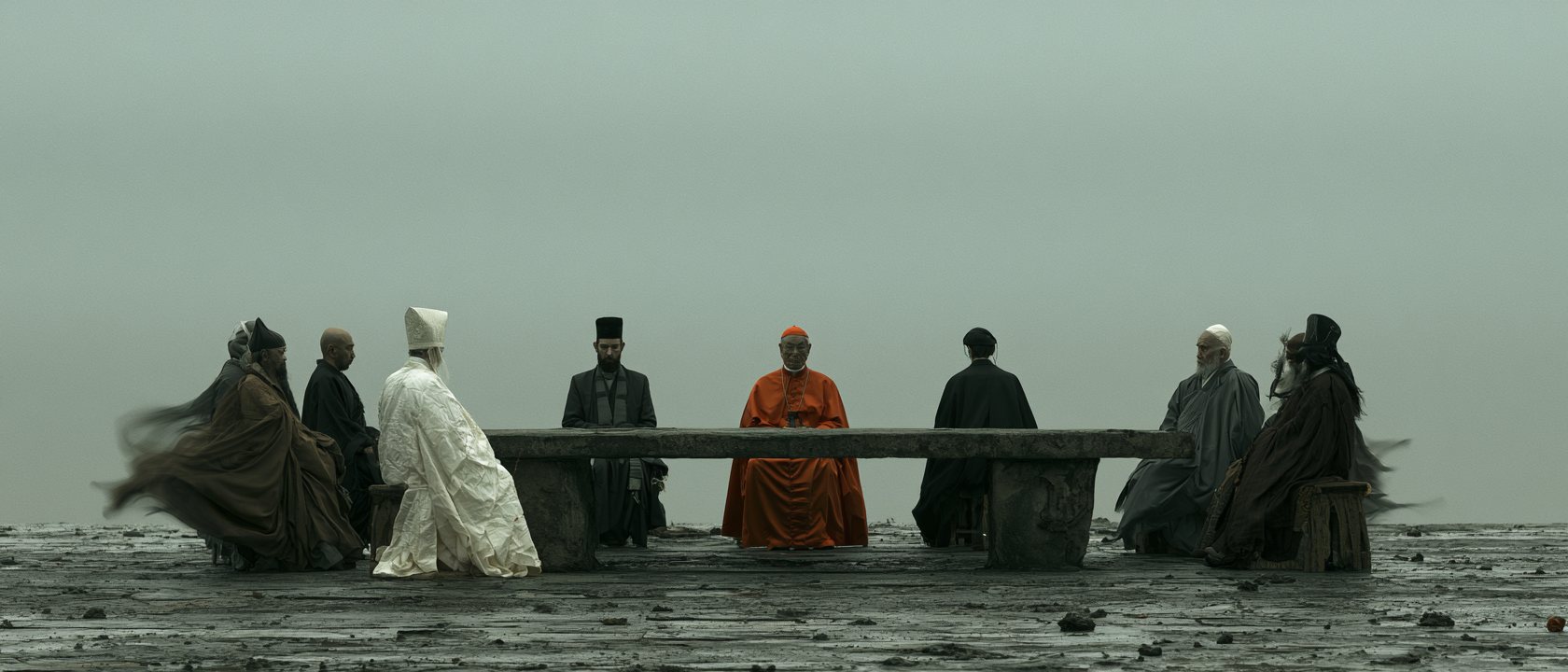
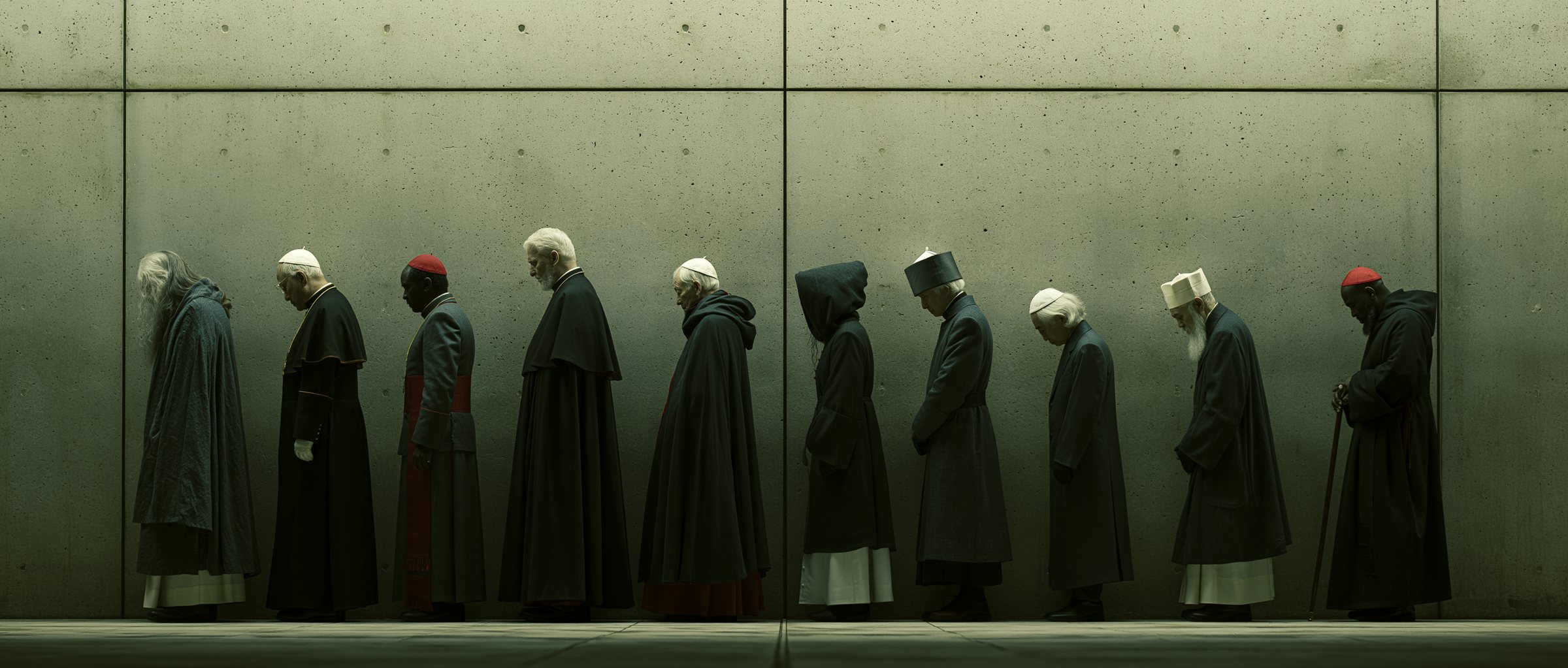
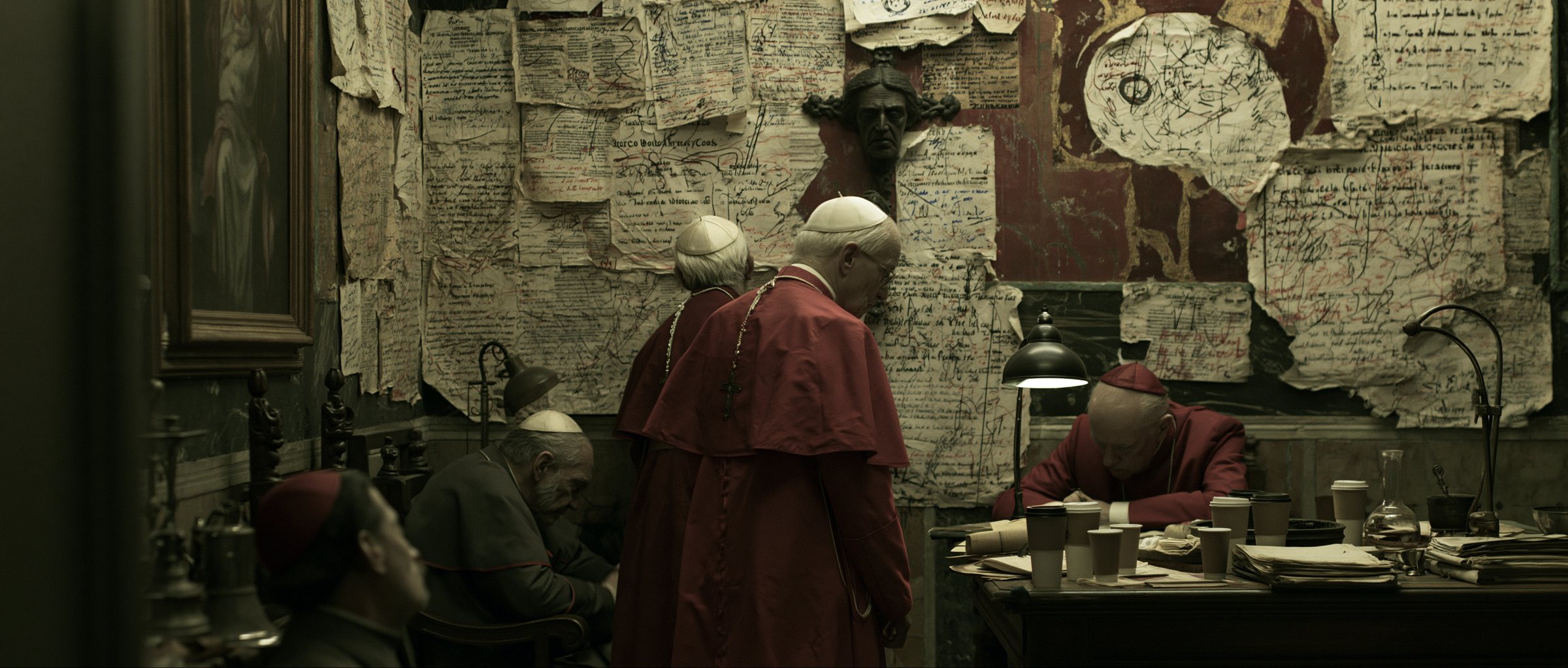
The Forging of the Text in the Vatican Huis Clos
We must speak to the hearts of the faithful, not just to the engineers at Stanford. Man grows through his doubts and limits; the machine is only a sequence of probabilities without transcendence.Cardinal Víctor Manuel Fernández · Prefect, Doctrine of the Faith
Our text must be scientifically irreproachable to be prophetically powerful. We do not condemn calculation; we forbid the transfer of human dignity to automated systems.Cardinal Michael Czerny
The Allegory of Nehemiah
Rebuilding the wall today means sanctuarizing attention, protecting human transmission, and deciding that technology will be the mortar that unites our efforts, and not the hammer that shatters our cohesion. It is a time of immense hope.Cardinal Michael Czerny
We are not losing control; we are rediscovering the meaning of shared responsibility.Sister Alessandra Smerilli
The Announcement to the World
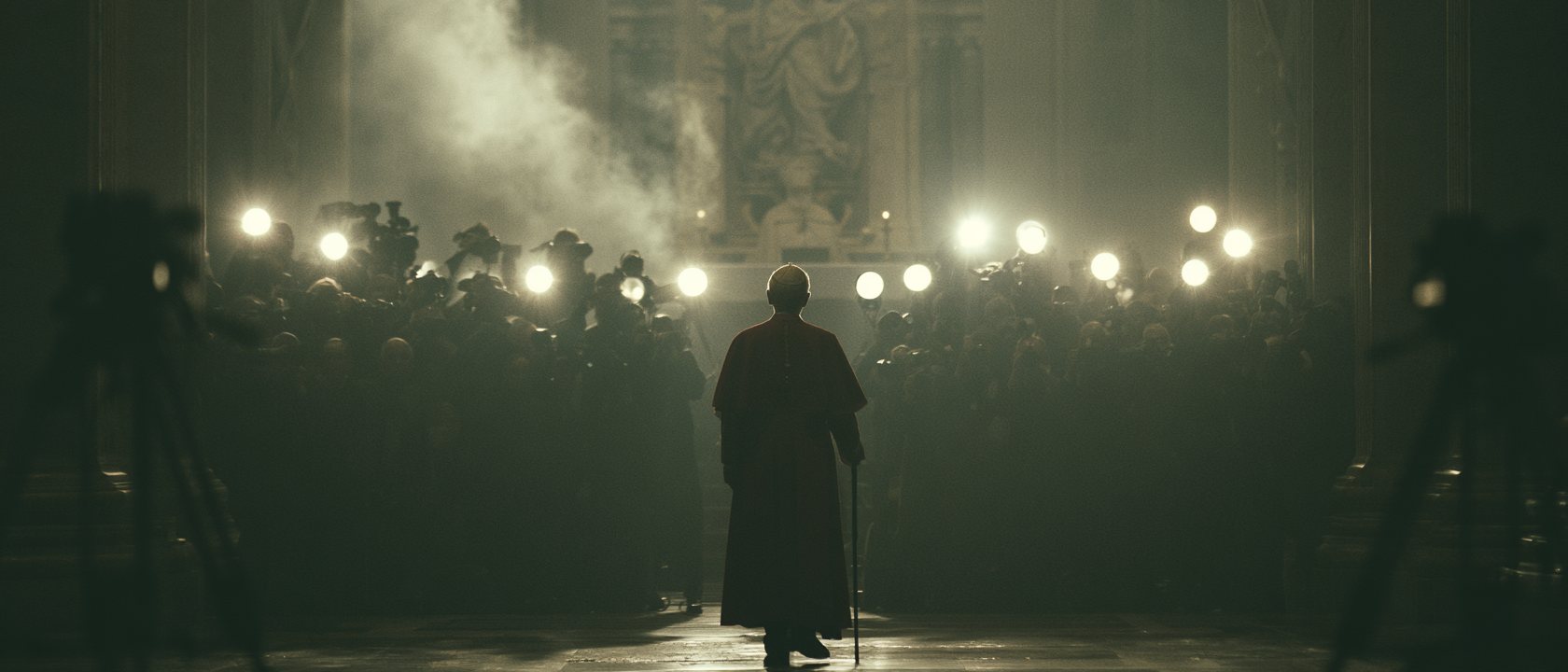
We present today to the world the first encyclical of His Holiness the Pope on artificial intelligence, entitled Magnifica Humanitas. The Church affirms with strength that artificial intelligence must remain a tool at the service of social justice and integral development, and that no automated system can ever replace human conscience, moral responsibility, or the mystery of faith.Cardinal Víctor Manuel Fernández
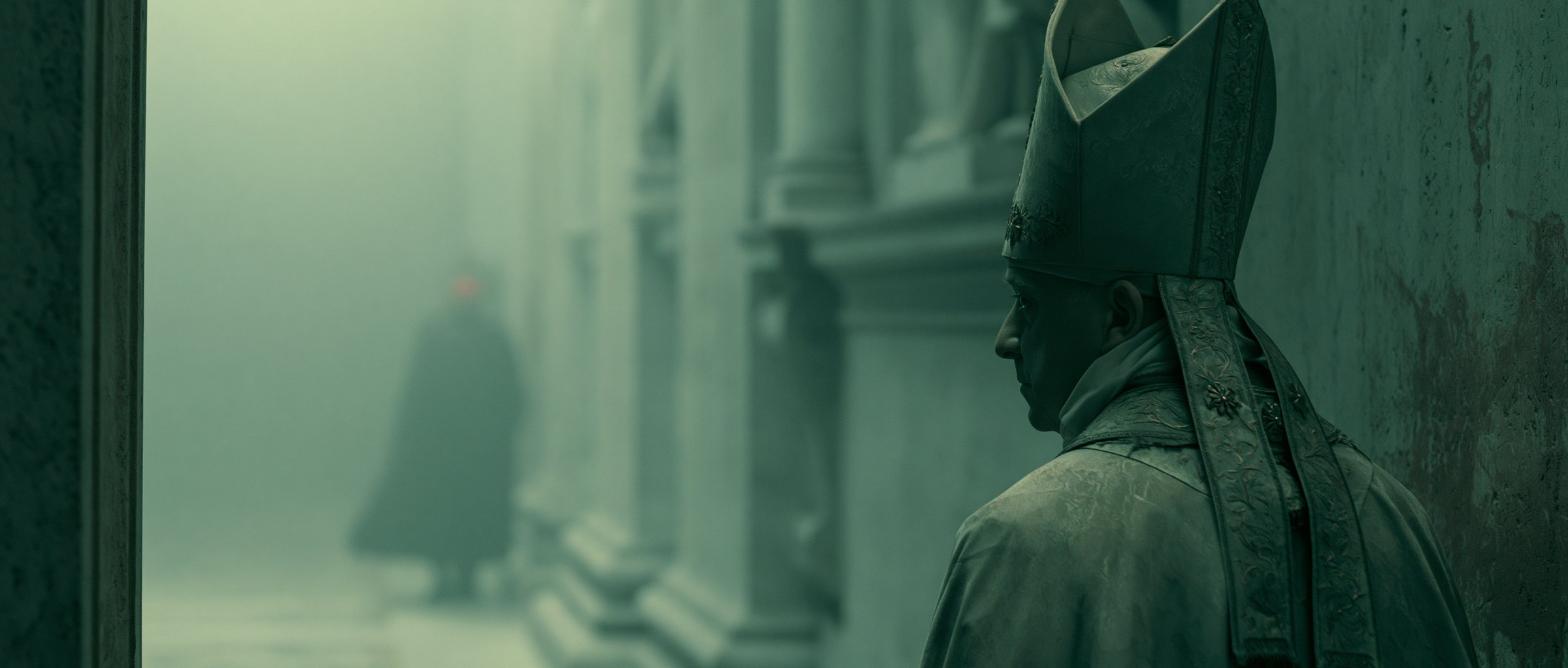
The photographers' flashes crackle in a storm of white light that floods the room. At the back, against a marble pillar, Cardinal Czerny watches, his old leather bag slung over his shoulder, his face serene but marked by the effort of recent months.
One feature. Three movements.
The Mandate
A confidential file, a blank page from the Pope's own hand, and a telescope that no longer needs the human eye.
What is lost when the machine looks for us?
The Descent
The valley of glass, a whistleblower's trembling hands, and the hidden rooms of Manila where the machine is kept pure.
Who pays for an intelligence that appears clean?
The Wall
Hiroshima's circle of faiths, the forging of the text word by word, and a storm of white light in the press office.
Can the oldest institution on earth write a frontier for the future?
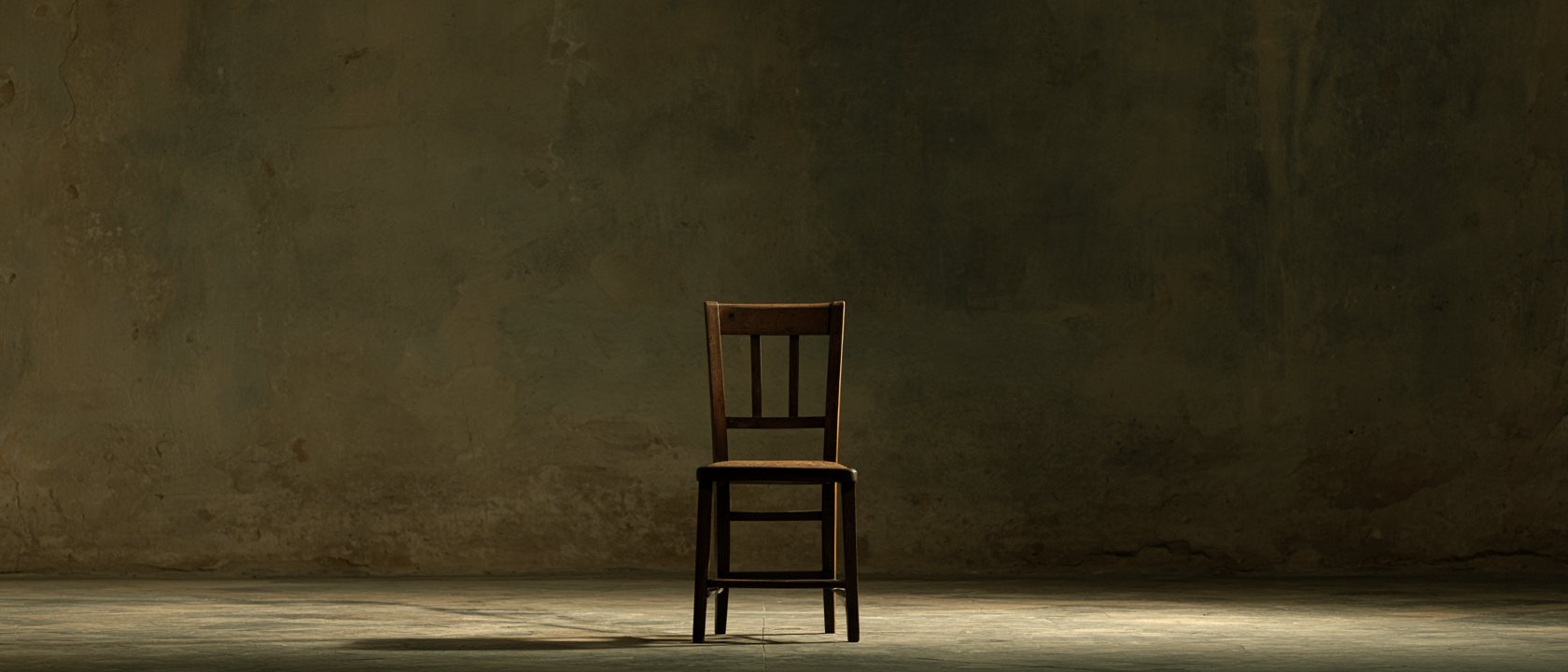
The chair is waiting.
The film's grammar is the frontal interview: one chair, one face, one held silence. Access is in active development through the production's channels in Rome. No confirmed claims are made in this document.
Cardinal Michael Czerny
Prefect, Dicastery for Promoting Integral Human Development
Monsignor Paul Tighe
Dicastery for Culture
Sister Alessandra Smerilli
Economist · Secretary of the Dicastery
Cardinal Víctor Manuel Fernández
Prefect, Dicastery for the Doctrine of the Faith
Paolo Ruffini
Prefect, Dicastery for Communication
The Astronomer of the Specola Vaticana
Vatican Observatory · Mount Graham
The Dissident Engineer
Identity protected
The Content Moderator
Manila · Identity protected
The Director of AI
Silicon Valley
The Interfaith Circle
Buddhist, Shinto, Jewish, and Muslim leaders · Hiroshima
Captured live. Held past the end of the sentence.
No traditional narrator. The film is guided entirely by the Cardinal's intimate mental voice, recorded like a nightly confession, and a series of frontal face-to-camera interviews with key global players.
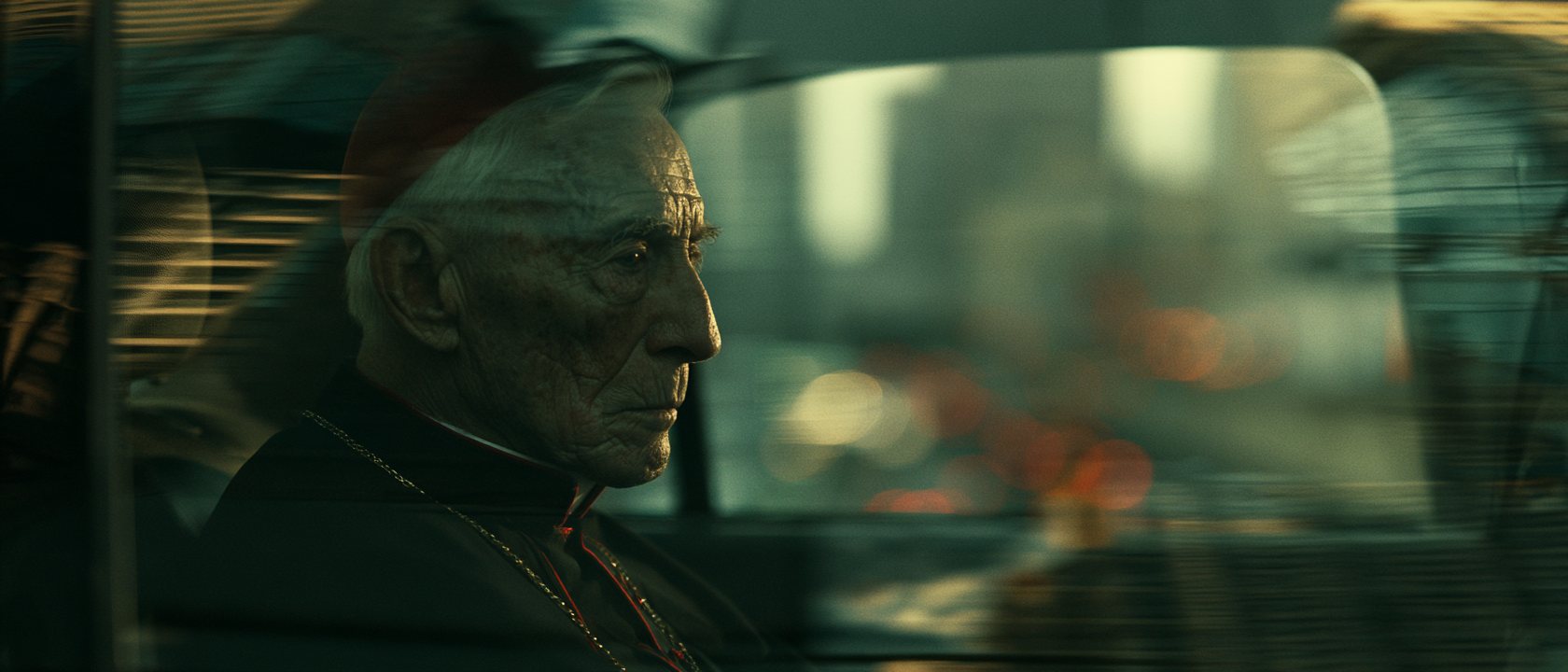
Interviews are lit to one grammar wherever the film travels: one chair, one face, one soft source. Locations are captured live, at walking pace, with long holds and natural sound. The Manila testimony is filmed by satellite link, exactly as the Cardinal receives it. The film is silent where the world is loud.
The illuminated manuscript meets the terminal.
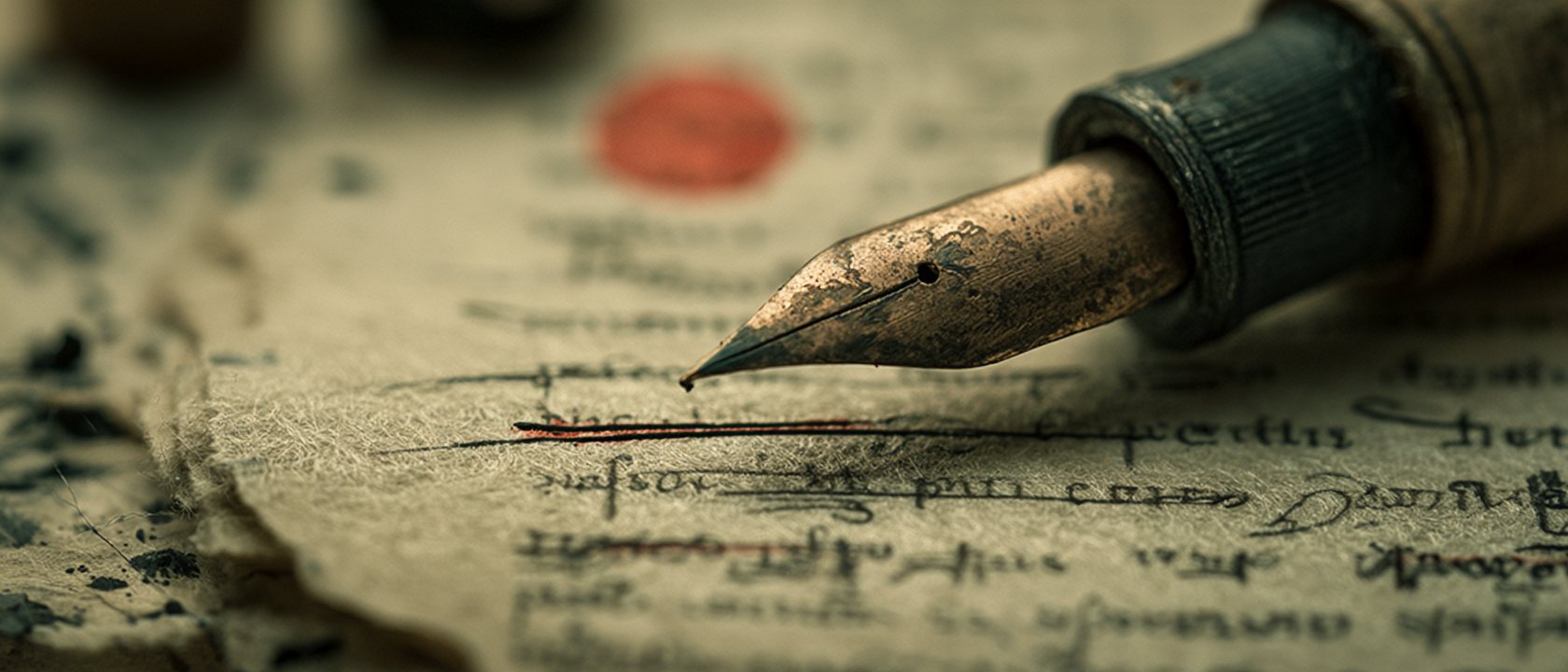
The film's graphic language is drawn from the encyclical itself: Latin set in a manuscript hand, struck through, circled, and emended on screen as the text is forged. Cartography of the quest is drafted and redrafted like the document. Data is rendered as marginalia, never as dashboards.
No holograms, no stock futurism. Titles, maps, and typographic sequences are built as one package to the standard of premium theatrical documentary.
Tone and craft references
Conclave
The corridors, the grade, the hush of institutional power
The Two Popes
Intimacy and humour inside the walls of the Church
The Social Dilemma
The scale of the stakes, made personal
AlphaGo
The machine as a character with consequences
For tone and craft reference only.
Protection is part of the grammar.
The film involves living, named leaders of the Catholic Church and anonymous witnesses whose livelihoods and safety depend on protection.
Identity
The whistleblower and the content moderator are filmed and cut to protect identity.
Trauma
The Manila sequence documents trauma without replaying it: no violent material appears on screen.
Sacred ground
Hiroshima is filmed under the guidance of the Peace Memorial and the faith communities present.
Consent
All access is negotiated on the record, all consent is informed, and every contributor sees the context of their testimony. Nothing in this document or the film fabricates the likeness of a real person.
Status: in development.
Access to all contributors is marked pending. Development conversations are underway through the production's channels in Rome. This document makes no confirmed access claims.
The machine will calculate faster and faster, but man must continue to assume alone the magnificent risk of loving and deciding. The real battle is only beginning.Cardinal Michael Czerny · the final frontal interview
HUMANITAS
MAGNIFICA HUMANITAS: The Vatican's Quest
A feature documentary in development · 1 x 90
A VRAÏ Production
Antoine Disle and Douglas Rath · Executive Producers and Directors
Private and confidential · Not for distribution · Build 6